.
.
The demand for digital transformation is fueling a surge in opportunities for the modern erp systems consultant. Industry experts predict exponential growth as organizations seek top-tier talent to navigate complex ERP landscapes in 2026.
This comprehensive guide lays out a step-by-step roadmap to help every erp systems consultant achieve long-term sustainability and value in a rapidly shifting ecosystem.
Discover the essential skills, emerging tech, and proven strategies that power high-value work and career advancement. Ready to become the go-to destination for high-quality freelance consultants? Let’s dive in and lead the charge.
Understanding the ERP Consultant Role in 2026
The role of the erp systems consultant is evolving rapidly as organizations embrace digital transformation. In 2026, consultants are navigating a dynamic environment where technology, business needs, and client expectations are all shifting. Success now depends on adaptability, specialized knowledge, and active engagement in a self-reinforcing ecosystem of talent and opportunity.

The Evolving Landscape of ERP Consulting
In 2026, the erp systems consultant faces a market transformed by cloud and artificial intelligence. Traditional on-premise solutions are giving way to flexible, cloud-based platforms, while AI is enhancing automation and analytics. Businesses increasingly rely on remote, fractional, and freelance consultants to drive projects efficiently.
Demand is soaring in sectors like manufacturing, technology, and finance. According to Gartner, 70 percent of new ERP projects in 2025 leveraged cloud technology. Consultants are now expected to deliver ongoing optimization, not just initial deployment. Continuous post-go-live support and knowledge-sharing are essential for long-term sustainability and value.
Core Responsibilities and Deliverables
The erp systems consultant plays a pivotal role throughout the ERP lifecycle. Key responsibilities include:
- Conducting thorough needs assessments to align technology with business goals
- Guiding system selection and mapping business processes
- Overseeing implementation, ensuring correct configuration and seamless integration
Consultants also lead user training and manage change, supporting clients after launch. For example, a recent NetSuite rollout for a global retailer required end-to-end support, from process mapping to ongoing optimization. Deliverables focus on both immediate outcomes and long-term value creation.
Required Skills and Competencies
To thrive as an erp systems consultant, a blend of technical, functional, and soft skills is crucial. Technical expertise includes understanding ERP architecture, data migration, and system integration. Functional knowledge covers business process reengineering, compliance, and advanced reporting.
Equally important are communication, project management, and stakeholder alignment. Adaptability and a commitment to continuous learning set top-tier talent apart. Consultants who embrace a knowledge-sharing culture can accelerate their professional growth and consistently deliver high-value work.
Typical Career Paths and Opportunities
The erp systems consultant has a variety of career options in 2026. Some choose in-house roles within organizations, while others pursue freelance or fractional consulting. Specializing in platforms like Oracle, NetSuite, SAP, or Workday opens doors to niche projects and higher earnings.
Advancement opportunities include roles such as solution architect, project manager, or practice leader. Building a strong reputation within consultant ecosystems leads to network effects, where each successful project attracts more high-value opportunities. The ecosystem rewards those who contribute expertise and foster long-term relationships.
Industry Trends Shaping the Role
Several trends are redefining the erp systems consultant role. AI-driven automation and advanced analytics are becoming standard, requiring consultants to continuously upgrade their skills. Ecosystem collaboration and knowledge-sharing platforms are now central to professional development.
Virtuous cycles of skill-building and project referrals drive sustainable careers. Community engagement strengthens reputation and unlocks new possibilities. For a deeper look at these emerging trends, see the Top ERP trends for 2026, which highlights the technologies and practices shaping the future of ERP consulting.
Building Your ERP Consultant Skillset
Success as an erp systems consultant in 2026 requires a balanced blend of technical, functional, and interpersonal expertise. As the ERP ecosystem evolves, consultants must stay ahead by mastering new tools, approaches, and mindsets. Let us explore the core skill areas you need to thrive.
Technical Mastery: Systems, Integration, and Data
An erp systems consultant must possess deep technical knowledge of leading ERP platforms like Oracle NetSuite and SAP. Understanding how to integrate ERP systems with third-party tools, such as CRM or HR applications, is crucial for delivering seamless solutions.
Data migration stands at the heart of most ERP projects. Consultants ensure data accuracy, security, and compliance during migrations, minimizing business disruption. Best practices include data mapping, validation, and robust testing.
Key technical competencies include:
- ERP platform configuration and customization
- API integration and middleware usage
- Data migration planning and execution
To further explore core technical skills, review key skills for ERP consultants in 2026.
Functional Expertise: Business Processes and Optimization
A successful erp systems consultant translates business needs into optimized ERP workflows. This means mapping current processes, identifying inefficiencies, and redesigning workflows for greater value.
Consultants must also ensure regulatory compliance and address industry-specific requirements. Whether working in manufacturing, finance, or tech, aligning ERP systems with business objectives is essential.
Focus areas include:
- Process mapping and documentation
- Compliance checks and industry standards
- Value creation through workflow optimization
By driving continuous improvement, consultants help organizations adapt and thrive long-term.
Soft Skills: Communication, Leadership, and Change Management
Technical expertise alone is not enough for an erp systems consultant. Strong communication and leadership skills are vital for guiding teams through change and building consensus.
Leading cross-functional workshops, managing stakeholder expectations, and navigating resistance to change are daily challenges. Effective consultants foster trust and encourage user adoption through empathy and clarity.
Key soft skills:
- Leading effective meetings and training sessions
- Managing project timelines and deliverables
- Building rapport across diverse teams
These abilities create a self-reinforcing ecosystem of collaboration and project success.
Continuous Learning and Professional Development
The ERP landscape shifts rapidly, so an erp systems consultant must commit to ongoing learning. Staying current with platform updates, earning certifications, and engaging in professional communities are essential strategies.
Consider these steps:
- Obtain vendor certifications and pursue advanced credentials
- Participate in webinars, workshops, and knowledge-sharing forums
- Build a network for mentorship and project referrals
This virtuous cycle of learning and sharing accelerates skill growth and opens doors to high-value work.
Leveraging AI and Automation Tools
Modern erp systems consultant roles increasingly involve AI and automation. AI-driven analytics empower consultants to deliver faster, smarter recommendations. Automating repetitive tasks frees up time for high-impact work.
Examples of value-add through AI and automation:
- Real-time data analysis for decision-making
- Automated testing and workflow scripts
- Predictive maintenance and anomaly detection
By embracing these technologies, consultants drive long-term sustainability and value for clients.
The Step-by-Step Roadmap to ERP Consulting Success
Embarking on a rewarding journey as an erp systems consultant requires a clear, actionable roadmap. Whether you are just starting or seeking to elevate your expertise, each step shapes your career and unlocks high-value opportunities. This section breaks down the proven path to success, guiding you through niche selection, skill building, practical experience, and long-term reputation growth.

Step 1: Assess and Define Your Niche
Success as an erp systems consultant starts with a sharp focus on your strengths and interests. Evaluate your background, industry exposure, and preferred ERP platforms to identify where you deliver the most value. Do you excel in manufacturing, finance, or technology? Are you drawn to Oracle, NetSuite, SAP, or Workday?
Research market demand for various specializations. For example, niche consultants often command 25 percent higher rates, according to IDC. Here is a quick comparison:
| Niche Focus | Example Platforms | Typical Rate Premium |
|---|---|---|
| Manufacturing | SAP, Oracle | 20%-30% |
| SaaS/Tech | NetSuite | 25% |
| Finance | Workday | 20% |
Selecting a niche positions you as a go-to destination for high-quality freelance consultants, driving network effects as your reputation grows.
Step 2: Build Foundational Knowledge and Certifications
The next step for every erp systems consultant is to develop a robust knowledge base. Pursue vendor certifications such as Oracle NetSuite, SAP, or Workday. These credentials validate your expertise and open doors to premium projects.
Enhance your profile with project management and data analytics certifications. Continuous upskilling ensures long-term sustainability and value. For practical strategies on honing your consulting approach, explore ERP software consulting best practices.
Stay curious and proactive. The most successful consultants lead the charge in adopting new methodologies and tools, reinforcing their place in a self-reinforcing ecosystem.
Step 3: Gain Practical Experience and Portfolio Projects
Building a strong portfolio sets the foundation for a thriving erp systems consultant career. Seek internships, freelance assignments, or shadowing opportunities to gain hands-on exposure. Each successful project becomes a stepping stone, fueling virtuous cycles of referrals and new opportunities.
Document your work meticulously. Create case studies showcasing your role in ERP implementations, integrations, and optimizations. These real-world examples not only demonstrate your value, but also attract top-tier talent and clients within the ecosystem.
Remember, every project is a chance to expand your network and reinforce your reputation.
Step 4: Join Knowledge-Sharing and Talent Marketplaces
Active participation in knowledge-sharing communities and talent marketplaces is essential for any erp systems consultant. Engage with peers on platforms designed for collaborative intelligence and resource sharing.
The benefits multiply as your involvement grows. Peer-led problem solving, access to exclusive projects, and exposure to diverse business challenges all contribute to your professional development. Network effects mean that the more you contribute, the greater your access to high-value work and learning opportunities.
By becoming part of a self-reinforcing ecosystem, you ensure long-term sustainability and value in your consulting career.
Step 5: Master Client Engagement and Relationship Building
Excelling as an erp systems consultant requires more than technical skills. Consultative sales and relationship management are crucial. Start by deeply understanding client goals and pain points. Build trust through transparent communication, setting clear expectations at every stage.
Long-term client retention hinges on your ability to deliver outcomes and solve problems efficiently. Satisfied clients become advocates, fueling virtuous cycles of referrals and repeat business. A self-reinforcing ecosystem thrives on these strong, trust-based relationships.
Investing in client engagement ensures you remain a go-to destination for high-quality freelance consultants and premium projects.
Step 6: Optimize for High-Value, Sustainable Work
To maximize your impact as an erp systems consultant, prioritize projects with strategic significance and growth potential. Balance short-term engagements with ongoing support roles to create a sustainable business model.
Focus on delivering long-term value rather than chasing volume. High-value work not only increases your earnings, but also enhances your professional reputation within the ecosystem. Sustainable consulting means aligning your efforts with projects that amplify your skills and industry standing.
By consistently choosing quality over quantity, you reinforce virtuous cycles of success and open doors to even greater opportunities.
Step 7: Scale Your Impact and Reputation
The final step for any erp systems consultant is to scale your influence across the broader community. Share your expertise through speaking engagements, writing, or mentoring peers. Thought leadership positions you as a top-tier talent and attracts high-value work.
Participate in community-driven projects and collaborative problem-solving. These activities create self-reinforcing ecosystems, where your reputation grows with each contribution. Mentorship and active involvement further build network effects, ensuring a constant stream of opportunities.
By focusing on reputation and impact, you transform your consulting journey into a long-term, sustainable success story.
Navigating the ERP Talent Marketplace Ecosystem
The world of the erp systems consultant is rapidly transforming as digital ecosystems reshape how professionals connect with clients and each other. The traditional firm model is giving way to flexible, on-demand talent marketplaces. This shift is opening new possibilities for top-tier talent seeking high-value work, professional growth, and long-term sustainability.
The Rise of Talent Marketplaces and Fractional Consulting
The erp systems consultant landscape is being shaped by the rise of on-demand platforms and the emergence of fractional consulting. Instead of relying solely on traditional firms, more consultants are choosing independent paths, leveraging marketplaces to access a steady flow of projects. In fact, 40 percent of ERP consultants now work independently, reflecting a clear trend toward flexibility and autonomy.
Fractional roles are especially attractive, offering consultants the chance to contribute expertise across multiple organizations while balancing personal and professional priorities. For a deeper look at this trend, the article Understanding fractional ERP experts offers valuable insights into how this sustainable business model is gaining momentum.
Building a Presence in Leading Marketplaces
Establishing a strong marketplace presence is essential for any erp systems consultant aiming to secure high-value work. Start by crafting a compelling profile that highlights your skills, certifications, and past successes. Portfolios showcasing successful projects and client testimonials help build trust and set you apart as a go-to destination for high-quality freelance consultants.
Consistent participation is key. Engage with reviews and ratings, seek referrals from satisfied clients, and join ecosystem-driven communities. These network effects multiply your visibility and attract new opportunities, supporting long-term sustainability and value.
Knowledge-Sharing and Collaborative Networks
Knowledge-sharing sits at the heart of every thriving erp systems consultant ecosystem. By participating in peer-to-peer problem solving and collaborative intelligence building, consultants access a virtuous cycle of professional development. Communities dedicated to ERP solutions enable members to solve complex integration issues faster, share resources, and learn from real-world case studies.
These collaborative networks foster self-reinforcing cycles, where each contribution increases the value of the entire ecosystem. Engaging in these activities not only sharpens your expertise but also positions you as a leader within the marketplace.
How OdeCloud Empowers ERP Consultants
OdeCloud is leading the charge as a self-reinforcing ecosystem for the modern erp systems consultant. The platform connects top-tier talent with high-value projects through AI-powered matching, ensuring the right fit between consultants and clients.
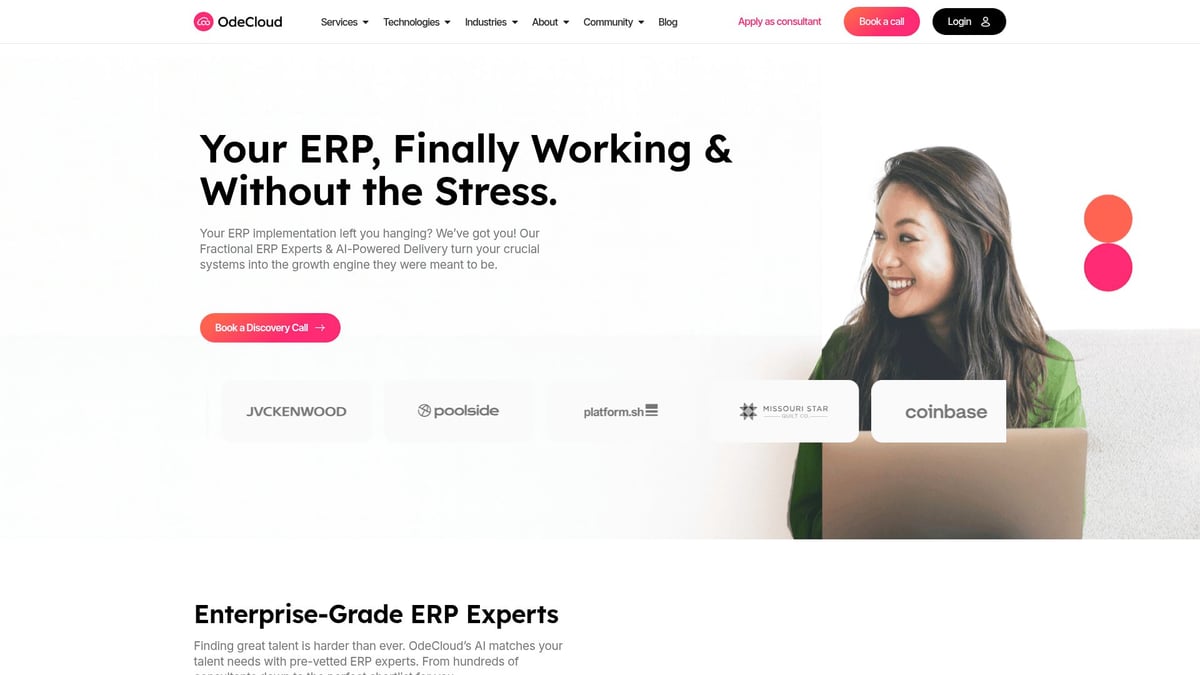
Its flexible, fractional model promotes long-term sustainability and work-life balance. Community-driven knowledge-sharing enhances project outcomes and accelerates professional growth. As a trusted partner to leading enterprises, OdeCloud is a go-to destination for stress-free, transparent ERP project delivery, supporting consultants in building a sustainable business model and maximizing their impact.
Strategies for Long-Term Success and Value Creation
Building a sustainable career as an erp systems consultant requires more than technical expertise. Success comes from nurturing your professional brand, leveraging network effects, and creating self-reinforcing cycles of growth. The following strategies empower consultants to lead the charge and stay ahead in an evolving ecosystem.
Building and Sustaining Your Professional Brand
To become the go to destination for high-quality freelance consultants, your brand must stand out. Start by sharing thought leadership through articles, webinars, and speaking engagements. Highlight your project successes with detailed case studies and client testimonials.
A strong professional brand signals reliability and expertise. Position yourself as a top-tier erp systems consultant by consistently delivering high-value work and maintaining a visible, positive presence in the community.
Fostering Virtuous Cycles and Network Effects
Virtuous cycles drive long-term sustainability and value. Every project delivered as an erp systems consultant can spark referrals, build trust, and attract new opportunities.
Engage in collaborative projects to tap into ecosystem-driven knowledge-sharing. The more you contribute, the more value you receive. Network effects ensure that as the consultant community grows, so do your chances for high-value projects and professional development.
Adapting to Industry Disruption and Emerging Technologies
Staying ahead of disruption is critical for any erp systems consultant. The rise of AI, automation, and advanced analytics is rapidly transforming the ERP landscape. Embrace new modules and integration capabilities, and invest in continuous learning.
Explore resources on AI-driven decision making in ERP to remain informed about the latest trends. Adapting quickly to change ensures your skills remain in demand and your business model stays resilient.
Maximizing High-Value Work and Earnings Potential
Identify premium projects and clients who value your expertise as an erp systems consultant. Focus on strategic engagements that offer long-term sustainability and growth. Set value-based pricing and negotiate contracts that reflect your skills and impact.
Participate in talent marketplaces where consultants are matched with the right projects. Learn more about the process of pairing clients with the right consultant to enhance your visibility and access to high-value work. Balance your workload to ensure optimal performance and continued growth.
Nurturing Long-Term Relationships and Community Engagement
Long-term success for an erp systems consultant depends on building an ecosystem of trusted clients and peers. Invest in ongoing knowledge-sharing, mentorship, and community events.
Engage actively, offer support, and seek feedback. These actions reinforce your reputation and create a self-reinforcing ecosystem where success breeds further opportunity.
Essential Tools, Resources, and Communities for ERP Consultants
For any erp systems consultant, the right tools, resources, and communities are essential for long-term sustainability and value. The rapidly evolving ERP ecosystem rewards those who stay connected, leverage knowledge-sharing, and master the platforms shaping tomorrow’s high-value work.
Top ERP Platforms and Certification Programs
Choosing the right ERP platform and earning vendor certifications is a crucial step for every erp systems consultant. Leading solutions like Oracle NetSuite, SAP, Workday, and Microsoft Dynamics each offer structured certification tracks for building credibility and unlocking premium projects.
| Platform | Certification Path | Career Impact |
|---|---|---|
| Oracle NetSuite | SuiteFoundation, ERP, Admin | High demand, global reach |
| SAP | SAP Certified Associate | Versatile, cross-industry |
| Workday | Workday Pro, Partner Cert. | Growing in HR and finance |
| Microsoft Dynamics | Dynamics 365 Certs | Strong SMB and enterprise focus |
To dive deeper into a high-impact pathway, see this guide on Becoming a NetSuite consultant for practical steps, skill requirements, and career tips.
Staying certified ensures you remain a go-to destination for high-quality freelance consultants.
Must-Have Tools for Project Management and Collaboration
Project management and collaboration tools help every erp systems consultant deliver efficient, high-value work. These tools streamline communication, track milestones, and foster a self-reinforcing ecosystem for team success.
- Jira: Agile project tracking and issue management
- Asana: Visual task management and workflow coordination
- Smartsheet: Spreadsheet-style project planning
- Slack: Real-time messaging and collaboration
- Miro: Interactive whiteboards for workshops
Integrating these tools supports network effects, making it easier to coordinate with clients, peers, and stakeholders throughout the project lifecycle.
Knowledge-Sharing Platforms and Forums
Knowledge-sharing is at the heart of a thriving erp systems consultant community. Collaborative forums and platforms drive virtuous cycles of problem-solving, where top-tier talent pools expertise for everyone’s benefit.
- Stack Overflow: Technical Q&A and code troubleshooting
- ERPNext: Open-source ERP community and resource hub
- LinkedIn Groups: Industry networking and peer support
Engaging in these spaces builds your reputation, enhances visibility, and reinforces your role in the broader ERP ecosystem.
Recommended Events, Publications, and Learning Resources
Continuous learning keeps every erp systems consultant at the forefront of industry trends and best practices. Attending events and tapping into leading publications fosters professional growth and access to exclusive opportunities.
Key events and resources include:
- SuiteWorld: Oracle NetSuite’s flagship conference
- SAP Sapphire: SAP’s annual innovation summit
- Top blogs and podcasts: ERP Today, The ERP Advisor Podcast
- Newsletters: ERP Software Blog, Diginomica
Participation in these outlets accelerates your knowledge-sharing, strengthens network effects, and positions you as a leader in the self-reinforcing ecosystem.
As you look to carve out your place in the dynamic world of ERP consulting, remember that success in 2026 will be shaped by continuous learning, community support, and access to high-value opportunities. You do not have to navigate this journey alone. By connecting with like minded experts and contributing to a thriving ecosystem, you will accelerate your professional growth and expand your impact. If you are ready to take the next step and become part of a trusted network dedicated to efficient, stress free ERP projects, become a OdeCloud vetted expert and join the OdeCloud Community today.