.
.

The business landscape is changing fast, and 2026 stands out as the moment when fractional services become a game-changer for organizations seeking top-tier expertise. Companies of all sizes now turn to these flexible solutions to stay ahead, streamline operations, and drive sustainable value.
This essential guide explores how fractional services are leading the charge in efficiency and innovation. You will discover what fractional services are, why their growth is accelerating, which types are available, and how to put them to work for your business.
With rapid industry expansion, real-world success stories, and proven strategies, this guide will show you how to harness the power of fractional services for your own success.
Understanding Fractional Services in 2026
Fractional services are rapidly reshaping the way organizations access expertise. In 2026, these flexible solutions stand at the center of a self-reinforcing ecosystem connecting top-tier talent with businesses that need specialized skills. As companies prioritize agility and efficiency, understanding the evolution, benefits, types, and ecosystem effects of fractional services becomes essential for leaders and professionals alike.

What Are Fractional Services?
Fractional services provide organizations with part-time, on-demand access to expert professionals across critical business functions. Unlike interim or consulting roles, fractional services focus on ongoing, flexible engagement tied to specific needs or projects. This approach allows companies to tap into high-value expertise, such as fractional CFOs, CMOs, CTOs, or ERP specialists, without the commitment of a full-time hire.
A key feature is the self-reinforcing ecosystem, where platforms, clients, and talent interact to create mutual benefit. As more experts join, the appeal grows for businesses, which in turn attracts additional top-tier talent. Network effects ensure that the value of fractional services increases with each new participant. In 2026, companies report an average cost savings of 35 percent compared to hiring full-time executives, making fractional services a strategic choice for sustainable value.
The Evolution of Fractional Services
The journey of fractional services began with early freelance gigs and has matured into sophisticated, AI-powered talent marketplaces. Throughout the 2020s, drivers such as remote work, digital transformation, and budget constraints accelerated adoption. These services have expanded well beyond C-suite roles, now encompassing specialized expertise in ERP, data science, and cybersecurity.
Long-term sustainability and value creation are at the forefront, benefiting both businesses and freelancers. The shift from traditional consulting to fractional delivery models reflects a broader movement in the freelance economy trends, signaling how knowledge-sharing and flexible engagement are leading the charge into 2026.
Key Benefits for Businesses and Talent
Fractional services deliver a range of benefits for both organizations and professionals. Cost efficiency stands out, as businesses pay only for the expertise they require. This model provides access to top-tier talent that may otherwise be out of reach.
Other advantages include:
- Flexibility to scale teams up or down as needed
- Enhanced knowledge-sharing and collaborative intelligence
- Faster speed to value and increased innovation
For talent, fractional services offer consistent access to high-value work and professional growth. According to an industry survey, 60 percent of mid-market companies plan to increase fractional hires by 2026, highlighting the growing trust in this sustainable business model.
Types of Fractional Services Available
In 2026, fractional services span a wide array of roles and industries. Common categories include:
| Type | Examples |
|---|---|
| Executive | CFO, COO, CTO, CMO, CHRO |
| Specialized Technical | ERP, AI/ML, cybersecurity, analytics |
| Operational Support | Accounting, HR, IT, project management |
| Industry-Specific | Manufacturing, SaaS, healthcare |
For instance, fractional ERP experts are often engaged for post-go-live projects, ensuring systems deliver ongoing value. This diversity makes fractional services the go-to destination for high-quality freelance consultants across sectors.
How Fractional Services Power the Modern Ecosystem
The modern fractional services ecosystem thrives on virtuous cycles. As more experts participate, more clients are drawn to platforms, which then attract additional top-tier talent. Talent marketplaces have become the hub for finding high-quality freelance consultants, while knowledge-sharing communities fuel professional development and greater rewards.
Ecosystem effects include collaborative problem-solving and resource pooling, which drive innovation and sustained value for all participants. Peer-reviewed solutions and team-based delivery models are now standard, ensuring quality and transparency in every engagement.
Why Fractional Services Are Booming in 2026
The rise of fractional services in 2026 is reshaping how organizations access expertise and drive innovation. Businesses are rapidly turning to this model to unlock agility, cost savings, and a broader pool of talent. But what exactly is fueling this surge, and how do these services create lasting value for both companies and professionals? Let us explore the forces behind this transformation.

Market Drivers and Trends
Fractional services are thriving in 2026 due to a unique convergence of economic, technological, and workforce shifts. Economic uncertainty and tighter budgets are prompting organizations to seek cost-effective solutions that still deliver quality results. The normalization of remote and hybrid work has made accessing global talent easier than ever. Technology, especially AI-driven platforms, enables seamless talent matching and project integration.
The demand for agility is also critical. Businesses want to scale expertise up or down quickly, responding in real time to market needs. According to industry forecasts, the fractional services market is projected to reach unprecedented value in 2026. For a more detailed analysis of these trends, see the Future of fractional services in 2026.
Business Challenges Fractional Services Solve
Organizations face several challenges that fractional services are uniquely positioned to address. Many companies struggle to access specialized skills without committing to full-time hires. Leadership gaps during periods of transition or growth can stall progress, but fractional roles offer immediate support.
Talent shortages, particularly in high-demand fields, make it difficult to find and retain top-tier talent. Fractional services bridge these gaps, providing access to niche expertise when and where it is needed most. This approach also enhances strategic flexibility, allowing businesses to pivot quickly and make informed decisions without long-term overhead.
The Virtuous Cycle of Value Creation
Fractional services create a self-reinforcing ecosystem where success attracts more participants, amplifying network effects. As more companies and experts join talent marketplaces, the pool of knowledge and experience grows, making these platforms the go-to destination for high-quality freelance consultants.
Knowledge-sharing accelerates solution discovery and reduces costly mistakes. The sustainable business model benefits both clients and freelancers, fueling long-term sustainability and value for the entire ecosystem. Case studies from leading marketplaces illustrate how this virtuous cycle leads to rapid innovation and shared success.
Benefits for Freelancers and Experts
For professionals, fractional services offer higher earning potential and access to high-value work that matches their expertise. These roles provide consistent project opportunities, enabling freelancers to build robust portfolios and maintain income stability.
Collaboration within knowledge-sharing communities supports ongoing professional development. Experts enjoy flexibility and autonomy in choosing assignments, while also participating in a supportive ecosystem that rewards contribution and innovation. Surveys show that 80 percent of fractional experts report greater job satisfaction compared to traditional employment.
Risks and Considerations for Businesses
While fractional services offer many advantages, businesses must navigate several risks. Ensuring quality and cultural fit is critical when integrating external experts. Data security and intellectual property protection require robust protocols, especially when sharing sensitive information.
Effective onboarding and clear communication are essential for seamless collaboration between fractional talent and internal teams. Legal and compliance considerations must be addressed to avoid pitfalls. Learning from past engagements helps organizations refine their approach and maximize the value of fractional services.
Core Types of Fractional Services: What’s Available in 2026?
The landscape of fractional services in 2026 is more diverse and robust than ever before. Organizations now have access to an expansive ecosystem of high-value experts, spanning every business function and industry. This evolution is driven by the need for agility, cost efficiency, and the ability to tap into specialized knowledge on demand.
Executive Fractional Services
Executive fractional services have become a strategic lever for growth, transformation, and leadership continuity. Companies turn to fractional CFOs, COOs, CTOs, CMOs, and CHROs to drive strategy, guide major initiatives, and provide seasoned leadership without the commitment of a full-time hire.
This model offers rapid access to top-tier talent for critical needs, such as financial planning, digital transformation, or market expansion. The self-reinforcing ecosystem ensures that as more leaders participate, the network effect delivers even greater value for all stakeholders.
Recent fractional CMO market growth statistics highlight the surge in demand for executive expertise, showing that 40 percent of mid-sized firms now use fractional executives. This trend is set to accelerate as organizations seek sustainable business models that prioritize flexibility and innovation.
Technical and Digital Fractional Services
Technical and digital fractional services are leading the charge in technology adoption and optimization. Businesses engage fractional ERP experts, AI and machine learning consultants, and cybersecurity leaders to manage complex systems and drive digital transformation.
These professionals provide post-go-live support, system tuning, and strategic guidance. The talent marketplace has become the go-to destination for high-quality freelance consultants in these fields, ensuring that organizations benefit from both knowledge-sharing and rapid deployment.
As the demand for advanced technical skills rises, fractional services empower companies to stay ahead of the curve and achieve long-term sustainability. The collaborative intelligence of these experts helps businesses unlock new value, often at a fraction of the cost of traditional consulting.
Operational and Functional Fractional Services
Operational and functional fractional services fill essential roles in accounting, HR, IT, and project management. These experts are instrumental in maintaining compliance, streamlining processes, and improving reporting accuracy.
Firms rely on fractional controllers for financial oversight and HR specialists to navigate complex workforce needs. This approach allows organizations to scale operational support up or down as needed, aligning resources with business priorities.
With a 25 percent year-over-year growth in operational fractional roles, the ecosystem continues to expand. The self-reinforcing cycle of talent and opportunity boosts efficiency, fosters collaboration, and delivers consistent results.
Industry-Specific Fractional Talent
Industry-specific fractional talent brings deep domain expertise to sectors such as healthcare, manufacturing, SaaS, legal, and logistics. These professionals address specialized compliance requirements, emerging technologies, and unique process challenges.
For example, regulated industries often require fractional compliance officers with up-to-date knowledge of evolving standards. In manufacturing, experts drive process digitalization and operational excellence. This targeted approach ensures every organization can access the precise skills needed for sustainable growth.
The value of fractional services is amplified by network effects, where more participation enhances the capabilities and reach of the entire ecosystem.
Knowledge-Sharing and Community-Driven Models
Knowledge-sharing and community-driven models are reshaping how organizations leverage fractional services. Collaborative platforms enable peer-reviewed solutions, team-based delivery, and ongoing professional development for all participants.
These communities act as virtuous loops, where every success story adds momentum to the ecosystem. Talent marketplaces with built-in knowledge-sharing features ensure high-quality outcomes and support continuous improvement.
By fostering learning and innovation, these models create a sustainable business model for both businesses and freelancers. The result is an environment where high-value work and shared expertise thrive.
OdeCloud: Fractional ERP Experts for Post Go-Live Success
OdeCloud connects businesses with top-tier fractional ERP experts specializing in NetSuite, Oracle, and Workday. Their AI-powered matching system ensures that every client finds the right consultant for their unique post-implementation projects.
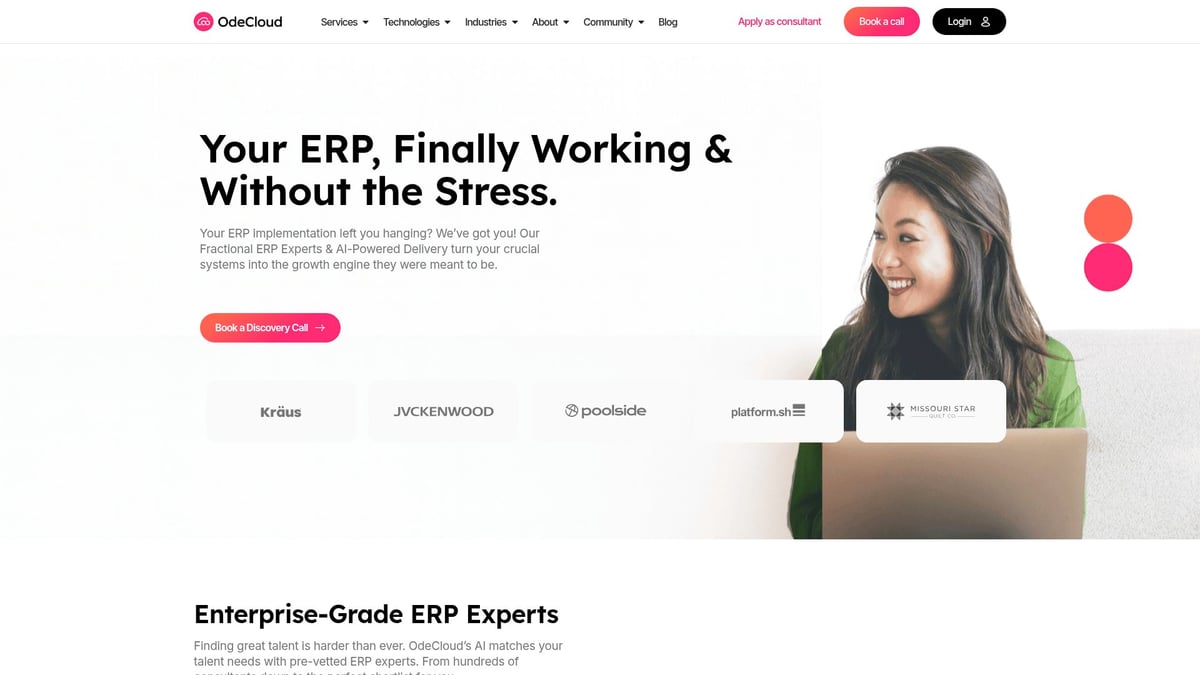
The OdeCloud ecosystem is built on peer-reviewed, community-driven solutions, providing transparency and quality assurance. Companies benefit from fast project launches, managed budgets, and a focus on delivering measurable outcomes.
Trusted by leading organizations in technology and manufacturing, OdeCloud's approach exemplifies the next generation of fractional services. Their commitment to knowledge-sharing and collaborative intelligence sets a new standard for stress-free ERP optimization and ongoing support.
How to Successfully Implement Fractional Services: Step-by-Step Guide
Implementing fractional services is a strategic process that empowers organizations to access top-tier talent efficiently. By following a clear, step-by-step approach, companies can maximize value and foster a self-reinforcing ecosystem of expertise and collaboration.

Step 1: Assess Your Needs and Define Objectives
Begin your journey with fractional services by identifying your organization’s specific needs. Pinpoint the skills or expertise gaps that could be filled by external professionals. Clarify the scope and timeline for your project and define the outcomes you expect to achieve.
Ask yourself:
- What business functions could benefit from fractional services?
- Are you seeking executive leadership, technical support, or operational expertise?
- Do you need short-term help or ongoing support?
For example, a company aiming for rapid digital transformation would assess which roles are mission-critical and determine if internal resources can deliver or if fractional services are required for success.
Step 2: Choose the Right Fractional Service Model
With your needs defined, select the most suitable model for engaging fractional services. Options include direct hiring, leveraging a talent marketplace, or working with a managed service provider. Each model offers unique benefits depending on your budget, urgency, and project complexity.
Compare platforms to understand their vetting processes, matching algorithms, and support structures. For additional guidance, explore Professional services insights to learn how leading companies navigate these choices.
Consider:
- The level of control you want over the selection process
- How quickly you need to onboard talent
- The importance of ongoing platform support
Making the right choice sets a strong foundation for integrating fractional services into your ecosystem.
Step 3: Source and Vet Top-Tier Talent
Finding the right professionals is crucial to realizing the value of fractional services. Begin by reviewing candidates’ credentials, industry experience, and peer feedback. Conduct structured interviews and practical skills assessments to ensure they align with your project requirements.
Key steps include:
- Evaluating cultural and operational fit
- Checking client testimonials and case studies
- Using peer-reviewed selection processes for transparency
A robust vetting process increases the likelihood of successful engagements and reinforces the network effects that make fractional services a go-to destination for high-quality freelance consultants.
Step 4: Integrate Fractional Experts with Your Team
Successful integration of fractional services depends on thoughtful onboarding and clear communication. Provide new experts with the necessary background, access, and tools to hit the ground running. Define their roles and responsibilities within existing workflows.
Best practices include:
- Sharing company values and goals
- Establishing regular check-ins and collaborative channels
- Inviting fractional experts to participate in key meetings
This approach fosters knowledge-sharing and encourages collaborative intelligence, ensuring your team benefits fully from the expertise fractional services provide.
Step 5: Manage, Measure, and Optimize Engagement
Ongoing management is essential for maximizing the impact of fractional services. Set clear KPIs and success metrics to track progress. Hold regular feedback sessions to address challenges and celebrate wins.
To optimize value:
- Adjust project scope or resources as needs evolve
- Capture lessons learned for future initiatives
- Use analytics to inform decision-making
Continuous improvement creates a virtuous cycle, enhancing long-term sustainability and value for both clients and talent within the fractional services ecosystem.
Industry Use Cases and Success Stories
Organizations across industries are turning to fractional services to drive efficiency, innovation, and measurable business value. Let us explore how these self-reinforcing ecosystems are transforming key sectors.
Technology and SaaS Companies
Tech firms, especially in SaaS, have embraced fractional services to scale rapidly and access top-tier talent. Startups and established companies alike rely on fractional CTOs, ERP experts, and product managers for post-launch optimization. For example, a SaaS provider seeking post-go-live support partnered with a fractional ERP consultant, reducing project timelines and increasing reliability. According to industry data, 55% of tech startups use fractional services for specialized projects. These self-reinforcing ecosystems allow talent marketplaces to become the go-to destination for high-quality freelance consultants. For more on how ERP experts support these implementations, see this ERP implementation companies overview.
Manufacturing and Supply Chain
Manufacturers are leveraging fractional services to address operational bottlenecks and compliance demands. By working with fractional operations specialists, they efficiently digitize processes and ensure regulatory adherence. One manufacturer engaged a fractional compliance expert to streamline digital transformation, resulting in improved efficiency and reduced risk. This approach fosters knowledge-sharing and long-term sustainability for both clients and freelancers. The network effects of talent marketplaces drive more participation, reinforcing the ecosystem and attracting even more specialized talent.
Finance, Accounting, and Legal
In finance, accounting, and legal sectors, fractional services are leading the charge for strategic growth and resilience. Law firms, for instance, engage fractional CFOs to guide expansion, optimize cash flow, and boost profitability. A recent case saw a law firm achieve a 30% increase in profitability after bringing in a fractional financial leader. These high-value work arrangements also benefit from advanced ERP and financial solutions. For deeper insights into these roles, explore Advanced NetSuite revenue management. As more firms join these platforms, the ecosystem delivers greater value, professional development, and a sustainable business model.
Healthcare and Regulated Industries
Healthcare providers and regulated industries rely on fractional services to access specialized compliance, IT, and data privacy expertise. By engaging fractional data security officers, organizations protect sensitive patient data and reduce regulatory risks. One healthcare provider implemented a knowledge-sharing model, ensuring rapid access to best practices and compliance updates. This virtuous cycle not only improves patient safety but also drives innovation and efficiency. The collaborative intelligence built within these networks ensures long-term value and adaptability for all ecosystem participants.
The Future of Fractional Services: Trends, Challenges, and Opportunities
As we look ahead, the future of fractional services is being shaped by a blend of advanced technology, evolving workforce dynamics, and growing demand for expert-driven results. Businesses and freelancers alike are witnessing a transformation in how top-tier talent is discovered, engaged, and retained.
AI and Automation in Talent Matching
Artificial intelligence is leading the charge in the evolution of fractional services. Modern talent marketplaces now use AI-driven algorithms to match businesses with the right experts, streamlining the selection process. Predictive analytics help organizations anticipate future skill needs, ensuring a proactive approach to project staffing.
This integration of AI not only accelerates project-talent matching but also enhances the quality and fit of each engagement. As a result, companies can quickly assemble high-performing teams, reducing time-to-value and increasing the efficiency of their fractional services ecosystem.
Expansion of the Self-Reinforcing Ecosystem
The self-reinforcing ecosystem around fractional services continues to grow as more professionals and businesses join collaborative platforms. Knowledge-sharing communities are central to this expansion, fostering innovation and continuous learning.
As participation increases, network effects amplify the value for everyone involved. Peer-reviewed solutions and team-based delivery models improve outcomes and build trust. The rise of fractional work among senior professionals is accelerating this trend, with experienced leaders contributing to a vibrant, sustainable business model for the future.
Evolving Business Models and Pricing
Fractional services are moving toward transparent, flexible business models that support long-term sustainability and value. Subscription plans, outcome-based billing, and value-driven pricing are becoming standard, giving companies greater control over budgets and deliverables.
A comparison of models:
| Model | Features | Benefits |
|---|---|---|
| Subscription | Recurring access | Predictable costs |
| Outcome-based | Pay for results | Performance alignment |
| Value-driven | Flexible scope, pricing | Custom fit for business needs |
These models make fractional services the go-to destination for high-quality freelance consultants, especially for organizations seeking efficiency and measurable results.
Addressing Challenges: Quality, Security, and Integration
While the benefits are clear, some challenges remain in maximizing the impact of fractional services. Ensuring consistent quality and finding the right cultural fit are ongoing priorities. Data privacy and compliance require robust safeguards, especially when integrating external experts into core operations.
Successful companies prioritize onboarding, clear communication, and ongoing feedback to seamlessly blend fractional talent with internal teams. Resources like Fractional leadership trends for SMEs in 2026 can help businesses stay ahead of emerging trends, ensuring a sustainable business model and long-term success in the evolving marketplace.
As you’ve seen throughout this guide, fractional services are redefining how businesses access expertise, drive innovation, and maintain agility—especially as we look toward 2026. If you’re ready to see how a tailored fractional approach can streamline your operations, accelerate post go live ERP success, and keep your projects on budget, why not take the next step? Let’s make your journey to efficiency and stress free ERP implementation a reality.
book a call with an expert consultant now
and discover how OdeCloud’s AI powered matching and community driven solutions can support your business goals.