.
.

2026 marks a turning point for the financial software consultant, as digital transformation reshapes businesses at an unprecedented pace. Today’s consultants face rapidly evolving technology and heightened client expectations, making adaptability more critical than ever.
This guide is designed to help every financial software consultant master new trends, anticipate client needs, and implement proven strategies for long-term success. You will discover how to evolve your consulting role, develop essential skills, deliver high-value projects, and build a thriving professional ecosystem.
Explore actionable steps, network-driven opportunities, and insights that position you to lead in a self-reinforcing ecosystem. Ready to elevate your approach and secure your place in the future of financial software consulting?
The Evolving Role of the Financial Software Consultant in 2026
The role of the financial software consultant is being redefined as digital transformation sweeps through every industry. Consultants are no longer just technical implementers—they are now strategic partners who drive business change, foster innovation, and build sustainable value. This evolution is shaped by new technologies, changing client expectations, and the rise of interconnected consulting ecosystems.

Shifting Market Demands and Digital Transformation
By 2026, cloud-based financial software will dominate the enterprise landscape, with 85 percent of organizations expected to use cloud ERP platforms. This shift has created a surge in demand for the financial software consultant who understands automation, AI, and real-time analytics. Clients are seeking experts who can guide them through the complexities of digital transformation, from implementing cloud-based financial software solutions to integrating advanced forecasting tools powered by AI.
The financial software consultant now plays a critical role in moving finance teams beyond transactional processes. Instead, they lead organizations toward strategic insights and business transformation. The ability to harness cloud technology and automation is no longer optional—it is essential for delivering competitive advantage.
Expanding Responsibilities and Value Creation
Today, the financial software consultant must wear many hats. The rise of multi-disciplinary consulting means blending expertise in finance, IT, and operations to offer holistic solutions. Clients rely on consultants to manage not just technology, but also data security, compliance, and evolving regulatory requirements.
Consultants are trusted as change agents, driving adoption of new digital tools and processes within organizations. Their value is increasingly measured by the long-term business outcomes they help achieve, such as improved efficiency, cost savings, and sustainable growth. The financial software consultant is expected to deliver measurable impact, not just complete projects.
Key responsibilities now include:
- Designing secure and compliant workflows
- Facilitating cross-functional collaboration
- Translating technical solutions into business results
Competitive Landscape and Client Expectations
The consulting marketplace is more dynamic than ever. The financial software consultant faces competition from freelance talent marketplaces and the rise of fractional consulting models, where clients can engage top-tier talent for specific needs. This flexibility has raised the bar for speed, transparency, and results.
Clients now expect:
- Faster project launches
- Transparent, outcome-based pricing
- Clear demonstration of ROI
A recent case study showed a mid-market firm reducing implementation time by 40 percent through agile consulting approaches. The financial software consultant who can adapt to these expectations and deliver high-value work stands out in the crowded field.
The Self-Reinforcing Ecosystem of Consultants and Clients
The modern consulting environment thrives on virtuous cycles and network effects. When financial software consultants actively share knowledge, everyone benefits—expertise grows, solutions improve, and client satisfaction rises. As more consultants and clients participate in these ecosystems, the overall value increases for all.
Community-driven platforms are becoming the go-to destination for high-quality freelance consultants and forward-thinking clients. These platforms encourage collaboration, peer review, and the exchange of best practices, creating a self-reinforcing ecosystem that delivers long-term sustainability and value.
Benefits of ecosystem participation:
- Faster access to proven solutions
- Ongoing professional development
- Stronger client-consultant relationships
Challenges and Opportunities
The rapid pace of technological change presents both hurdles and opportunities. The financial software consultant must continually upskill to stay relevant, mastering new tools and adapting to shifting client needs. Balancing deep specialization with broad adaptability is crucial.
Those who embrace ecosystem thinking and prioritize knowledge-sharing are leading the charge in 2026. By participating in collaborative networks and fostering virtuous loops, consultants position themselves for ongoing success and access to high-value work.
The evolving landscape rewards those who are proactive, adaptable, and committed to building a sustainable business model rooted in continuous learning and shared success.
Critical Skills and Competencies for Success
Succeeding as a financial software consultant in 2026 means mastering a blend of technical, strategic, and interpersonal skills. As the industry evolves, those who invest in these critical areas will stand out in a self-reinforcing ecosystem, consistently accessing high-value work and long-term sustainability and value.

Technical Mastery and Adaptability
A top-performing financial software consultant must demonstrate deep expertise in leading platforms like Oracle NetSuite, SAP, and Workday, as well as AI-powered tools. Staying ahead requires continuous learning and regularly updating knowledge on new features, integrations, and automation capabilities.
Adapting quickly to new technologies sets consultants apart. Many are now leveraging low code platforms to deliver custom solutions faster and more efficiently. This adaptability helps clients achieve rapid results and cultivates trust, opening the door to recurring high-value projects.
Strategic Communication and Stakeholder Management
Translating complex software capabilities into clear business value is essential for every financial software consultant. Clients expect more than technical know-how; they want partners who can articulate benefits to finance leaders, CFOs, and cross-functional teams.
Effective consultants lead diverse groups, address resistance to change, and drive alignment. According to Forrester, 70 percent of ERP projects succeed when consultants embed strategic communication into their approach. Clear messaging and ongoing dialogue ensure projects meet client expectations and deliver measurable outcomes.
Data-Driven Decision Making and Analytical Skills
In 2026, the financial software consultant who can interpret data and translate insights into action will have a distinct edge. Advanced analytics tools empower consultants to identify trends, forecast outcomes, and recommend cost-saving opportunities.
For example, a consultant might analyze transaction data to spot inefficiencies, then propose automation that saves both time and resources. This analytical approach not only delivers immediate value but also builds credibility, fostering long-term client relationships within a thriving ecosystem.
Regulatory Acumen and Risk Management
Navigating the evolving landscape of financial regulations is a must for any financial software consultant. Clients rely on consultants to understand compliance requirements, from data privacy laws to industry-specific mandates.
Building comprehensive frameworks for risk management and data security is non-negotiable. Consultants who proactively address these areas help clients mitigate risks and ensure solutions remain robust, secure, and aligned with regulatory changes, thus becoming trusted advisors in their network.
Collaborative Intelligence and Knowledge-Sharing
Collaboration is the cornerstone of a self-reinforcing ecosystem for financial software consultants. Actively participating in communities, sharing best practices, and contributing to peer-reviewed solution libraries accelerates professional growth and project success.
Virtuous loops emerge as more consultants share insights, creating greater access to high-value work for all. Platforms that foster consulting best practices and trends help consultants stay ahead, access top-tier talent, and build sustainable business models that deliver ongoing value.
Step-by-Step Guide: Delivering High-Value Financial Software Consulting Projects in 2026
In 2026, delivering high-value projects as a financial software consultant requires a structured, adaptive approach. Each project phase is an opportunity to create virtuous cycles, foster network effects, and build a self-reinforcing ecosystem that drives long-term sustainability and value. Here is a comprehensive step-by-step guide to ensure consistent, measurable outcomes.
Step 1: Discovery and Needs Assessment
The journey begins with a deep dive into the client’s business environment. As a financial software consultant, you must understand strategic goals, operational pain points, and the current software landscape. Leveraging AI-powered diagnostic tools enables rapid, data-driven assessments, helping uncover hidden inefficiencies or integration gaps.
- Conduct stakeholder interviews to clarify objectives.
- Analyze existing processes using real-time analytics.
- Identify opportunities for automation and AI adoption.
By engaging in thorough discovery, the financial software consultant lays a foundation for trust and transparency. This step is critical for tailoring solutions that drive both immediate wins and long-term sustainability.
Step 2: Solution Design and Strategic Planning
In this phase, the financial software consultant collaborates closely with stakeholders to co-create a solution roadmap. The focus shifts from isolated fixes to holistic, ecosystem-driven transformation. Balancing quick wins with scalable long-term strategies is essential.
- Map business requirements to software capabilities.
- Integrate automation, AI, and ecosystem partners for future readiness.
- Use scenario planning to anticipate regulatory or operational changes.
A practical example: blending finance and operations modules to streamline reporting and forecasting. This approach positions the financial software consultant as a strategic partner, leading the charge in value creation.
Step 3: Implementation and Change Management
Execution is where vision meets reality. The financial software consultant leads agile project management cycles, ensuring iterative delivery and rapid feedback. Adopting Agile ERP project management methodologies enables flexible adaptation as project needs evolve.
- Launch user training and adoption campaigns early.
- Facilitate regular feedback loops with end users.
- Employ structured change management to increase buy-in.
Data shows that projects with comprehensive change management see up to three times higher adoption rates. By guiding clients through this phase, the financial software consultant maximizes both immediate impact and long-term ecosystem value.
Step 4: Optimization and Continuous Improvement
Post-implementation, the financial software consultant monitors key performance indicators and solicits user feedback to refine processes. Optimization is ongoing, not a one-time event. Sharing insights with the consultant community accelerates problem-solving and amplifies network effects.
- Regularly review system usage and business outcomes.
- Identify further automation or integration opportunities.
- Share lessons learned in consultant knowledge-sharing forums.
This virtuous loop of continuous improvement ensures the financial software consultant remains at the forefront of innovation and client satisfaction.
Step 5: Post-Go-Live Support and Value Realization
Long-term success depends on robust post-go-live support. The financial software consultant establishes ongoing cycles of enhancement, knowledge-sharing, and client collaboration. This self-reinforcing ecosystem supports sustainable business models and recurring value.
- Provide proactive support and regular system health checks.
- Co-create new solutions with clients as needs evolve.
- Foster a culture of feedback and continuous learning.
By nurturing these relationships, the financial software consultant helps build a go-to destination for high-quality freelance consultants and top-tier talent.
Common Pitfalls and Proactive Solutions
Every financial software consultant faces challenges. Scope creep, communication breakdowns, and misaligned expectations can derail projects. Proactive strategies include transparent reporting frameworks and regular alignment meetings with stakeholders.
| Pitfall | Solution |
|---|---|
| Scope creep | Clear project charters, frequent reviews |
| Misaligned expectations | Transparent reporting, open dialogue |
| Poor adoption | Early training, ongoing support |
Addressing these risks up front strengthens trust and reinforces the long-term sustainability and value of your consulting engagements.
How OdeCloud Empowers Financial Software Consultants
OdeCloud’s AI-powered talent marketplace is designed for the modern financial software consultant. It connects you with high-value work and a peer-vetted solution library, streamlining project launches and continuous optimization.
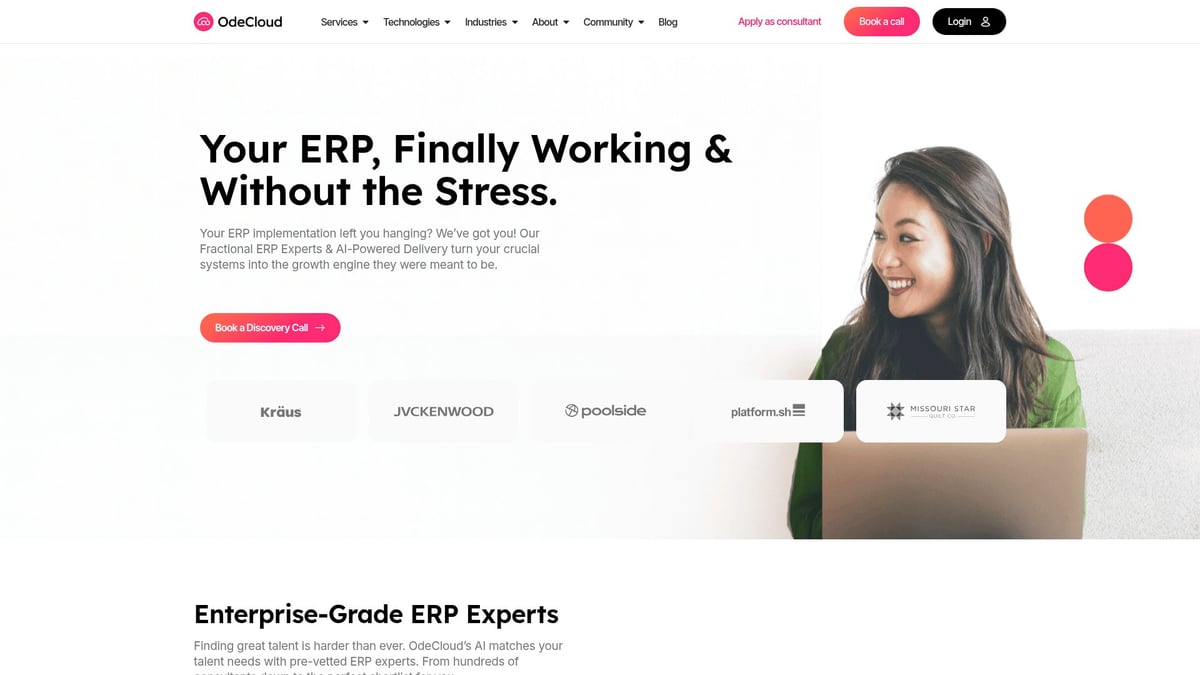
Through a fractional consulting model, OdeCloud enables managed budgets and rapid project ramp-up. Community-driven knowledge-sharing fosters virtuous cycles, letting financial software consultants access top-tier talent and accelerate professional development. Trusted by leading organizations, OdeCloud is leading the charge in building a self-reinforcing ecosystem for sustainable, transparent consulting success.
Leveraging Virtuous Loops, Network Effects, and Ecosystem Thinking
Building a self-reinforcing ecosystem is now essential for every financial software consultant striving to lead in 2026. As digital transformation accelerates, collaborative intelligence and knowledge-sharing have become the foundation of consulting success.
In this new landscape, virtuous cycles emerge as consultants and clients share solutions and insights. Each shared best practice accelerates learning, creates efficiencies, and raises project success rates. Network effects amplify this value: every additional participant, whether a consultant or client, expands the knowledge base and multiplies opportunities for everyone. Modern consultant communities are designed to foster peer review and improvement, making it easier to access high-value work and stay ahead of the curve. According to AI’s Impact on Professional Services in 2026, AI-driven collaboration tools and digital platforms are rapidly increasing the speed and depth of these network effects for the financial software consultant.

Building a Self-Reinforcing Consultant-Client Ecosystem
The true power of a self-reinforcing ecosystem lies in its ability to create ongoing value for both consultants and clients. When a financial software consultant participates in knowledge-sharing, they not only contribute to a broader community but also benefit from a growing library of peer-reviewed solutions.
This approach leads to faster onboarding, streamlined project delivery, and consistently higher client satisfaction. Community-driven platforms allow consultants to learn from each other's experiences, making it possible to solve complex challenges more efficiently. As more consultants and clients join these platforms, the collective value increases for everyone involved. The self-reinforcing ecosystem is what sets top consultants apart in a competitive market.
Sustainable Business Models for Long-Term Success
The consulting industry is shifting from transactional engagements to relationship-driven, recurring value models. For the financial software consultant, adopting a sustainable business model means focusing on transparency, flexibility, and measurable outcomes.
Ecosystem platforms encourage long-term partnerships by matching consultants with high-value projects that align with their expertise and career goals. These platforms also retain top-tier talent by offering professional growth opportunities and access to a vibrant community. As consulting becomes more integrated with technology, staying up to date with industry trends is critical. Platforms that prioritize sustainability help consultants keep pace with Top Tech Trends Shaping 2026, ensuring they remain relevant and valuable to clients.
The Go-To Destination for High-Quality Consultants
Talent marketplaces are quickly becoming the go-to destination for both clients seeking expertise and freelance consultants looking for high-value work. By leveraging ecosystem thinking, these platforms attract top-tier talent and facilitate collaboration on complex projects.
For the financial software consultant, participating in such a marketplace means gaining access to a broader range of opportunities and being able to showcase skills within a trusted network. This environment fosters a culture of continuous improvement, where consultants can build their personal brand, contribute to solution libraries, and engage with like-minded professionals. Leading the charge in a self-reinforcing ecosystem gives consultants a strategic advantage and positions them for long-term sustainability and value.
Real-World Impact and Measurable Outcomes
Ecosystem-driven consulting models deliver tangible results for both consultants and clients. Industry benchmarks show that platforms built on virtuous loops and network effects achieve 30 percent higher client retention and 25 percent faster project delivery.
Consultants who actively participate in peer networks can resolve integration challenges more efficiently, drawing on the collective intelligence of the community. For every financial software consultant, this means more consistent project success, greater professional growth, and increased earning potential. The measurable impact of these ecosystems proves that embracing collaborative intelligence is the key to thriving in 2026.
Maximizing Professional Growth and Earning Potential as a Consultant
Maximizing your professional growth and earning potential as a financial software consultant in 2026 requires a proactive and ecosystem-driven approach. As the industry evolves, standing out means engaging in virtuous loops, leveraging network effects, and building your reputation within a thriving talent marketplace.
Consistent Access to High-Value Projects
Positioning yourself for consistent access to high-value work is essential. The most successful financial software consultant professionals strategically build their profiles in talent marketplaces and actively seek projects that align with their skills.
- Showcase project outcomes and client feedback to boost credibility.
- Prioritize platforms that reward transparency and measurable results.
- Develop niche expertise to attract recurring, high-reward engagements.
Staying visible and reliable helps you become the go-to destination for clients seeking top-tier talent.
Knowledge-Sharing and Community Participation
Engaging in knowledge-sharing is a key driver for growth. As a financial software consultant, participating in solution libraries and forums not only supports peers, but also increases your own visibility and access to new opportunities.
- Contribute best practices and lessons learned.
- Review and improve community-shared solutions.
- Build authority by sharing insights on evolving technologies.
Virtuous loops emerge as more consultants share, creating a self-reinforcing ecosystem that benefits everyone.
Professional Development Through Collaboration
Collaboration is at the heart of long-term sustainability and value. Working with peers on cross-disciplinary projects, participating in mentorship, and learning from others’ experiences accelerates your professional growth as a financial software consultant.
- Join peer learning initiatives and mentorship circles.
- Embrace change management principles to navigate client transformations, as highlighted in change management in ERP projects.
- Participate in feedback sessions to continuously refine your skills.
Active community involvement leads to higher job satisfaction and access to high-value work.
Efficiency Gains and Work-Life Balance
Efficiency is vital for balancing multiple clients and maintaining well-being. A financial software consultant can leverage AI tools and automation to streamline project delivery and optimize time management.
- Use digital assistants for scheduling and reporting.
- Automate routine tasks to focus on high-impact work.
- Apply cost management strategies and stay informed on emerging tech, as seen in Finance Trends 2026: Financial Services Perspective.
These practices help you deliver faster, avoid burnout, and sustain a healthy work-life balance.
Building a Personal Brand in a Networked Ecosystem
Establishing a strong personal brand is crucial for every financial software consultant. Demonstrate expertise through thought leadership, case studies, and active contributions to the community.
- Publish articles and share project successes.
- Engage in speaking opportunities and webinars.
- Consistently deliver measurable results to build a reputation as a sought-after consultant.
In a thriving ecosystem, these steps ensure you are recognized as a leader, attracting both high-value work and professional growth.
As you look ahead to thriving as a financial software consultant in 2026, it is clear that being part of a dynamic, knowledge-sharing community is key to staying ahead. The guide has shown that success comes not just from technical skills, but from connecting with peers, accessing high-value projects, and embracing innovative solutions. If you are ready to accelerate your growth, expand your network, and become a trusted expert for leading organizations, I encourage you to become a OdeCloud vetted expert and join the OdeCloud Community today. Let us shape the future of consulting together.