.
.
ERP projects are more complex than ever, with organizations relying on the expertise of an erp solution architect to ensure success. As digital transformation accelerates, the stakes for designing scalable, future-ready systems have never been higher.
In this guide, you will uncover the evolving responsibilities, essential skills, and industry trends shaping the future of solution architecture. Learn how to stay ahead of the curve, build a self-reinforcing ecosystem of knowledge-sharing, and drive long-term sustainability and value for your business and career.
Are you ready to leverage insider insights and become a go-to destination for high-quality ERP expertise in 2026? Dive in and take the next step toward leading the charge in this dynamic field.
The Evolving Role of the ERP Solution Architect in 2026
The erp solution architect is at the heart of modern business transformation. As organizations shift to more agile and interconnected systems, this role is evolving faster than ever. The erp solution architect is now a strategic leader, bridging technical innovation and business goals.
Defining the ERP Solution Architect
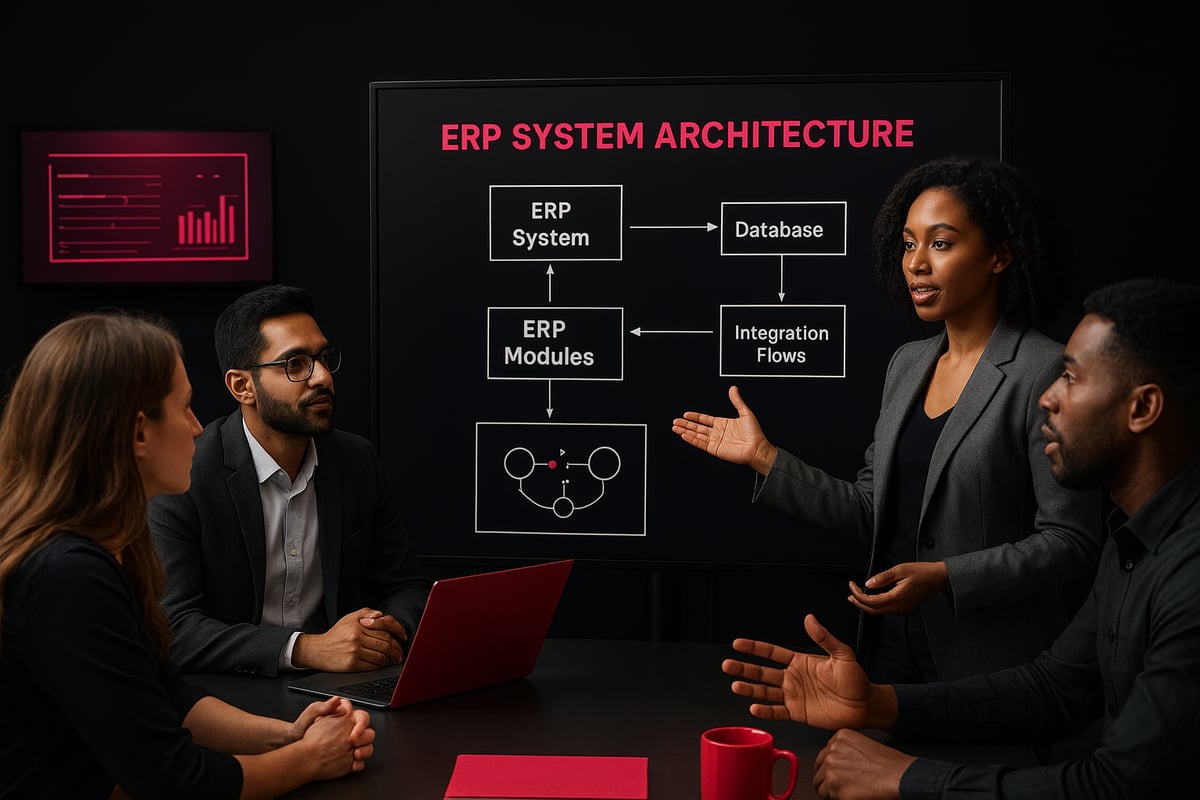
The erp solution architect is responsible for designing robust system architectures that serve as the backbone of enterprise operations. Core responsibilities include overseeing technical frameworks, managing integration points, and ensuring seamless data flows between platforms.
This role stands apart from a product owner, project manager, or technical lead. While a product owner defines business needs and priorities, and a project manager focuses on timelines and resources, the erp solution architect ensures that technical and business objectives align at every stage. The architect’s influence can determine whether a project delivers measurable business outcomes or stalls due to technical misalignment.
Consider a scenario where an erp solution architect bridges IT and business. By translating executive vision into technical blueprints, the architect empowers teams to innovate confidently. According to industry surveys, 70% of ERP projects cite architecture as a critical success factor, underscoring the architect’s pivotal role.
Key responsibilities include:
- Designing scalable system architectures
- Overseeing integration and data management
- Providing technical oversight and quality assurance
An effective erp solution architect is the linchpin connecting business strategy to technology execution.
Expanding Scope and Expectations
The scope of the erp solution architect has expanded rapidly. Modern ERP environments are more complex, often involving hybrid, multi cloud, and best of breed solutions. This complexity demands cross functional leadership, as architects collaborate with finance, operations, HR, and IT to align goals and processes.
Stakeholder management is now central. The erp solution architect must balance executive priorities, business requirements, and technical constraints, creating a shared vision for long term sustainability and value. The focus has shifted to scalability, security, and future proofing, ensuring solutions remain relevant as business needs evolve.
Lessons from failed projects highlight the risks of unclear architectural leadership. Without a strong erp solution architect, organizations face fragmented systems, data silos, and escalating costs. Successful architects foster open communication, drive consensus, and anticipate future challenges.
Key expectations today:
- Leading cross functional teams and initiatives
- Managing complex, hybrid ERP landscapes
- Ensuring scalability and security from the outset
The erp solution architect is now expected to guide organizations through transformation, not just technical implementation.
Emerging Challenges and Opportunities
Emerging technologies are reshaping the erp solution architect’s landscape. Rapid advances in AI, automation, IoT, and analytics present both challenges and opportunities. Architects must design systems that integrate new tools while maintaining compliance and data privacy.
Regulatory requirements, such as GDPR and industry specific mandates, add layers of complexity. Continuous learning and adaptability are essential traits for the modern erp solution architect. As digital transformation accelerates, architects who embrace new technologies and methodologies will lead the charge.
A real world scenario is the adaptation of legacy systems to support new business models. Architects must enable seamless integration of modern applications without disrupting critical operations. According to ERP Trends for 2026, architects who drive innovation and foster knowledge sharing will shape the next generation of ERP success stories.
Opportunities ahead include:
- Championing AI and automation in core processes
- Building secure, compliant architectures
- Leading digital transformation initiatives
The erp solution architect is positioned as both a technical expert and a visionary leader, ready to navigate the evolving ERP ecosystem.
Core Skills and Competencies for ERP Solution Architects
Success as an erp solution architect in 2026 hinges on a dynamic blend of technical expertise, business acumen, leadership, and adaptability. As organizations increasingly demand high-value work and sustainable business models, mastering these skills is essential for anyone looking to become a go-to destination for high-quality freelance consultants or to lead the charge in digital transformation.

Technical Mastery
An erp solution architect must possess deep technical knowledge across leading ERP platforms such as Oracle, SAP, NetSuite, and Workday. This expertise goes beyond basic configuration. It includes integration architecture, API management, data modeling, and ensuring robust master data management.
Security, compliance, and performance optimization are also core to the architect’s toolkit. Staying hands-on with emerging technologies and tools ensures technical currency, which is crucial in environments where rapid change is the norm. Architects who keep their technical edge can proactively address challenges and deliver scalable, future-proof solutions. For more on the consulting side of these challenges, see ERP software consulting insights.
Business Acumen and Domain Expertise
A top erp solution architect understands that technical skills alone are not enough. They must grasp core business processes such as finance, supply chain, HR, and manufacturing. This knowledge enables them to translate complex business requirements into practical technical solutions that drive value.
Industry-specific expertise is equally important. Whether working in healthcare, retail, or manufacturing, architects must adapt solutions to suit each sector’s unique challenges. For example, an architect who can pivot a retail ERP system for rapid e-commerce expansion demonstrates both domain expertise and business agility. This dual focus ensures long-term sustainability and value for every project.
Communication and Leadership
Effective communication is at the heart of every successful erp solution architect. The ability to articulate complex technical solutions to non-technical stakeholders is a must. Leading workshops, facilitating requirements gathering, and delivering clear solution presentations help bridge gaps between business and IT teams.
Building trust with both business leaders and technical teams requires strong interpersonal skills. Storytelling is a powerful tool, enabling architects to gain stakeholder buy-in and foster a shared vision. When architects lead with clarity and confidence, they create a self-reinforcing ecosystem of trust and collaboration that drives project success.
Problem-Solving and Solutioning
Creative solution design is a defining trait of a skilled erp solution architect. Balancing standardization with necessary customization requires a nuanced approach. Architects regularly evaluate trade-offs between cost, risk, and time-to-value, ensuring optimal outcomes for all stakeholders.
Scenario-based thinking is essential. By anticipating downstream impacts, architects avoid technological dead ends and ensure that solutions remain flexible and robust. For instance, selecting a modular ERP component rather than rigid customization can save valuable time and resources in future upgrades.
Collaboration and Ecosystem Building
A successful erp solution architect thrives in collaborative environments. Working closely with vendors, partners, and third-party consultants expands the knowledge base and introduces new perspectives. Fostering knowledge-sharing within teams builds collective intelligence and supports high-value work.
Leveraging network effects is key. As participation in professional communities and talent marketplaces grows, so does the value of the ecosystem. Architects who contribute to this virtuous loop not only enhance their own expertise but also elevate the quality of ERP projects across the industry. Cross-functional teams that embrace open collaboration consistently outperform siloed groups during major ERP rollouts.
Continuous Learning and Adaptability
The pace of change in ERP technology means that continuous learning is non-negotiable for every erp solution architect. Staying current with new platforms, integration methods, and security standards is essential for maintaining expertise. Participation in professional communities, online forums, and industry events accelerates growth and builds a resilient network.
Embracing feedback and iterative improvement keeps architects at the forefront of innovation. Industry reports show that 80 percent of top-performing architects engage in ongoing learning activities. This commitment to adaptability not only drives personal growth but also ensures that architects remain trusted advisors in an ever-evolving digital landscape.
Future Trends Shaping ERP Solution Architecture
The landscape for every erp solution architect is changing rapidly, and the trends shaping the next generation of ERP are more dynamic than ever. To stay ahead, professionals must understand emerging technologies, evolving business needs, and the vital role of ecosystem-driven value.

AI, Automation, and Intelligent ERP
AI is revolutionizing what an erp solution architect delivers. Predictive analytics, process automation, and smart decision support are now core parts of the ERP ecosystem. Architects must design systems ready for AI, ensuring data is accessible and processes are adaptable.
Consider automating financial close or using AI for supply chain forecasting. These capabilities free up human talent for high-value work while boosting efficiency and accuracy. Intelligent ERP platforms can surface insights in real time, empowering strategic business moves.
To succeed, an erp solution architect must evaluate when and how to embed AI, balancing automation with the need for human oversight. Staying current on AI trends and toolsets is essential for building future-ready solutions.
Cloud, Hybrid, and Composable ERP
The shift to cloud-native and modular ERP platforms is transforming the architect’s role. Today’s erp solution architect must manage complex environments that blend on-premises, private, and public cloud resources. This hybrid approach supports scalability while protecting legacy investments.
Composable ERP is gaining traction, letting organizations mix and match best-of-breed modules for rapid innovation. For example, migrating legacy systems to cloud-based platforms can unlock agility and future-proof operations, especially when guided by a clear architectural vision.
Industry leaders are already embracing these models. For more on how composable ERP and modular strategies are reshaping the field, see the Top ERP Trends to Know About for 2026. These changes demand that every erp solution architect develops expertise in orchestrating multi-cloud and modular solutions.
Data Governance, Privacy, and Security
With data at the heart of every ERP system, the erp solution architect must prioritize data governance and compliance. Regulations like GDPR and CCPA have raised the bar for privacy, making data lineage and quality non-negotiable.
Architects need to embed security controls at every layer, from integration to user access. Secure connections with external partners, encrypted data flows, and proactive monitoring are key strategies. When data governance is strong, organizations reduce risk and increase trust with stakeholders.
The erp solution architect’s role is evolving into a guardian of data integrity and compliance. This responsibility is only growing as cyber threats and regulatory pressures intensify across industries.
Ecosystem and Network Effects
Talent marketplaces, open API platforms, and knowledge-sharing communities are creating virtuous cycles in ERP. For an erp solution architect, these ecosystems offer access to top-tier talent and collaborative intelligence that drives innovation.
When more participants engage, value multiplies. Successful ERP projects now depend on self-reinforcing ecosystems where architects, developers, and business leaders share expertise. Open API ecosystems and third-party app marketplaces further accelerate solution enhancement and integration.
Being active in these networks positions an erp solution architect as a go-to expert, opening doors to high-value work and continuous professional growth. The power of collective intelligence cannot be overstated in today’s rapidly shifting ERP environment.
Sustainable and Ethical Architecture
Long-term sustainability and ethical responsibility are now central to the erp solution architect playbook. Minimizing technical debt, designing for resource efficiency, and supporting green IT initiatives help organizations thrive over time.
Responsible automation and ethical AI are increasingly important, ensuring technology serves business goals without unintended harm. Architects must weigh environmental impact and promote sustainable business models as part of their strategy.
By prioritizing sustainability, an erp solution architect not only delivers immediate value but also supports the broader goals of environmental stewardship and social responsibility. This approach builds trust and creates lasting competitive advantage.
The future will reward erp solution architect professionals who lead the charge in innovation, sustainability, and ecosystem building. Staying alert to these trends is the key to long-term success in the evolving world of ERP.
Step-by-Step Guide to Becoming a Top ERP Solution Architect
Embarking on the path to becoming a top erp solution architect requires a blend of technical mastery, business insight, and a commitment to lifelong learning. This step-by-step guide outlines a proven approach for building a self-reinforcing ecosystem of expertise, positioning you at the forefront of the field.
Step 1: Build a Solid Foundation
Start by gaining deep expertise in at least one major ERP platform, such as SAP, Oracle, or NetSuite. Developing strong business process knowledge is essential, as it enables you to translate organizational needs into effective solutions.
Pursue relevant certifications and participate in hands-on training programs. This foundation not only enhances your technical credibility but also ensures you understand the real-world challenges an erp solution architect faces daily.
- Master a core ERP system
- Study key business processes
- Obtain industry-recognized certifications
With a solid foundation, you are ready to tackle complex solution design and integration tasks.
Step 2: Cultivate Advanced Technical and Business Skills
To excel as an erp solution architect, expand your skillset beyond platform expertise. Learn best practices in integration, data management, and security. Stay hands-on with the latest tools and technologies to maintain technical relevance.
Just as important, develop advanced communication, leadership, and stakeholder management skills. Being able to bridge technical and business perspectives sets you apart as a trusted advisor.
- Explore integration architecture and API management
- Deepen your understanding of data governance
- Practice clear and persuasive communication
Balancing technical and business competencies fuels your long-term sustainability and value.
Step 3: Gain Real-World Experience
Nothing replaces practical experience for an erp solution architect. Engage in full-cycle ERP implementations, from requirements gathering to go-live and post-deployment optimization. Take on increasing responsibility in solution design and architectural decision-making.
Seek mentorship from seasoned experts and learn from diverse project environments. Working with leading ERP implementation companies exposes you to best practices and high-value work.
- Join end-to-end ERP projects
- Learn from project successes and setbacks
- Build a portfolio of architectural achievements
Real-world exposure is the key to developing a personal brand as a go-to destination for high-quality freelance consultants.
Step 4: Embrace Continuous Learning and Networking
The top erp solution architect never stops learning. Participate in professional associations, online communities, and industry events to stay current on trends and technologies.
Share your knowledge and engage in collaborative projects to strengthen your professional network. This collective intelligence creates a self-reinforcing ecosystem where everyone benefits.
- Attend webinars and workshops
- Contribute to knowledge-sharing platforms
- Network with other professionals
Continuous learning and networking ensure you remain adaptable and ready to lead during times of rapid change.
Step 5: Lead with Vision and Adaptability
True leadership as an erp solution architect means championing innovation and driving digital transformation. Foster a culture of collaboration, collective intelligence, and network effects within your teams.
Prioritize solutions that offer long-term sustainability and value, avoiding short-term fixes that lead to technical debt. Stay alert to emerging trends and ethical considerations to ensure your designs stand the test of time.
- Encourage experimentation and innovation
- Align solutions with strategic business goals
- Emphasize sustainable and ethical practices
By leading the charge with vision and adaptability, you become an architect trusted to deliver high-value work and lasting results.
Common Pitfalls and How to Avoid Them
ERP projects often have high stakes, and even experienced professionals can fall into traps that undermine success. For every erp solution architect, understanding these pitfalls is essential to building a self-reinforcing ecosystem that delivers long-term sustainability and value.
Common Pitfalls Facing ERP Solution Architects
A recurring pitfall is the absence of a clear architectural vision. Without strong guidance from an erp solution architect, projects can lose direction, resulting in misaligned objectives across business and IT teams. This often leads to fragmented solutions that lack coherence and scalability.
Another major challenge is the temptation to over-customize ERP systems. While customization can address unique needs, excessive modifications increase complexity, maintenance costs, and risk of technical debt. On the other hand, under-utilizing standard features can mean missed opportunities for efficiency, leaving organizations with underwhelming results.
| Pitfall | Impact |
|---|---|
| Lack of vision | Misaligned goals, project delays |
| Over-customization | Higher costs, technical debt |
| Under-utilization | Lost value, inefficiency |
The Consequences of Weak Architectural Leadership
Integration issues are another critical problem area. Poorly planned integrations create data silos and process breakdowns, making it difficult for businesses to realize the full benefits of their ERP investment. A proactive erp solution architect anticipates these challenges and designs systems that promote seamless data flow and interoperability.
Neglecting change management is equally detrimental. Without a thoughtful approach to user adoption, even the most technically sound solutions may fail to deliver results. Engaging stakeholders early and often, and clearly communicating the value of changes, are key responsibilities for those leading the charge in ERP architecture.
Overcoming Integration and Knowledge Barriers
Ineffective knowledge-sharing and siloed expertise can stall progress. When teams operate in isolation, they miss out on the virtuous cycles created by collective intelligence. The most successful erp solution architect professionals foster a culture where insights and lessons learned circulate freely. Leveraging a self-reinforcing ecosystem, such as those found in talent marketplaces, can connect organizations with Understanding fractional ERP experts and boost access to top-tier talent, driving high-value work and innovation.
Building a Sustainable, Future-Proof ERP Ecosystem
Failure to future-proof the architecture invites rapid obsolescence and mounting technical debt. ERP environments must be designed with adaptability in mind, so they can evolve as business needs shift. Data shows that ERP project overruns cost businesses 30 percent more on average when architectural leadership is lacking. Real-world turnaround strategies often involve revisiting core design principles, investing in sustainable business models, and rebuilding trust through improved knowledge-sharing.
For every erp solution architect, awareness and avoidance of these pitfalls is not just about preventing failure. It is about leading the way toward a resilient, networked, and value-driven ERP ecosystem.
Insights from Industry Leaders and Communities
Learning from the experience of top ERP solution architect leaders is essential for anyone aiming to excel. These experts consistently stress the importance of a self-reinforcing ecosystem, where knowledge-sharing accelerates both individual and project success. In practice, the most effective ERP solution architect professionals actively seek advice, leverage peer insights, and contribute to collaborative forums. Many also highlight the evolving role, noting how responsibilities increasingly overlap with related positions. For a deeper understanding of these responsibilities, the Oracle ERP consultant role offers valuable context on the blend of business and technical expertise required.
Lessons from Leading ERP Solution Architects
A recurring theme from industry leaders is the impact of virtuous cycles within ERP communities. When ERP solution architect professionals share practical tips and real-world experiences, they create a network that propels everyone forward. This approach not only builds trust but also reduces the risk of repeating common mistakes. Top-tier talent thrives in environments that reward transparency and continuous improvement, making the collective intelligence of the group a critical asset.
- Open forums for best practices
- Peer-to-peer mentorship programs
- Collaborative problem-solving sessions
These knowledge-sharing initiatives ensure that each ERP solution architect can adapt to new business demands efficiently.
The Power of Network Effects in ERP Ecosystems
Network effects play a vital role in increasing the value of ERP talent marketplaces. As more ERP solution architect professionals participate, the quality and speed of problem resolution improve for all. The ecosystem becomes a go-to destination for high-quality freelance consultants, enabling rapid access to specialized skills. This self-reinforcing cycle fosters long-term sustainability and value for both organizations and individuals.
Participating in these platforms allows architects to engage with high-value work, drive innovation, and strengthen their professional networks. The result is an environment where opportunities multiply as more experts contribute.
Building Your Personal Brand and Driving Innovation
For an ERP solution architect, building a personal brand as a trusted expert is increasingly important. Sharing case studies, contributing to community discussions, and mentoring newcomers all reinforce an architect’s reputation. Community-driven innovation is now a hallmark of successful ERP implementations, where diverse perspectives lead to creative, sustainable solutions.
- Publish thought leadership articles
- Lead workshops and webinars
- Participate in open-source ERP projects
By engaging in these activities, ERP solution architect professionals not only enhance their visibility but also contribute to a sustainable business model that benefits the broader ecosystem.
Looking Ahead: Future Trends and Collective Wisdom
Industry statistics reveal that 75 percent of successful ERP projects leverage external expertise or talent marketplaces. This trend underscores the value of collective intelligence and the self-reinforcing ecosystem that emerges from active participation. Leading ERP solution architect voices predict even greater reliance on collaborative platforms and AI-powered tools in the coming years. For a forward-looking perspective on how artificial intelligence is shaping the field, explore AI in ERP: 7 Key Trends to Watch in 2026.
Embracing these insights positions ERP solution architect professionals at the forefront of innovation, ready to lead the charge toward long-term sustainability and value.
The Value of Fractional ERP Experts and Talent Marketplaces
In today's competitive landscape, organizations need agile solutions and specialized skills to keep pace. The erp solution architect role is evolving, with many businesses now turning to fractional ERP experts for ongoing optimization after major project milestones.

Why Talent Marketplaces Create Virtuous Cycles
Talent marketplaces are more than just platforms—they foster a self reinforcing ecosystem where businesses and freelance consultants thrive together.
- Rapid project launches become possible with immediate access to top tier talent.
- Managed budgets and clear visibility support sustainable business models.
- Knowledge sharing leads to higher rewards for freelancers and better outcomes for clients.
As more experts and companies join, network effects amplify, making these marketplaces a go to destination for high quality freelance consultants.
Real World Benefits and AI Powered Matching
Forward thinking companies leverage fractional ERP experts for enhancements, system tuning, and stress free rollouts. This approach empowers the erp solution architect to drive value long after go live. AI powered talent matching, as explored in AI Integration in ERP Evaluation, ensures organizations connect with the right expertise at the right time.
By prioritizing collective intelligence, organizations create a self sustaining cycle of long term sustainability and value, leading the charge in digital transformation and high value work.
As you reflect on the evolving landscape of ERP solution architecture and the vital skills that set industry leaders apart, remember that your expertise has never been more valuable. In 2026, organizations are seeking architects who not only master technology but also thrive in collaborative, AI-powered environments like OdeCloud’s. If you’re passionate about driving successful ERP projects and want to be part of a forward-thinking community that values continuous learning and real-world impact, this is your moment. Ready to take the next step in your career? become a OdeCloud vetted expert and join the OdeCloud Community today