.
.
The erp business consultant is now at the center of digital transformation, guiding organizations toward long-term sustainability and value in 2026. As companies face rapid change and new market demands, this guide offers expert insights and practical steps for erp business consultant success.
Explore the evolving ERP landscape, essential skills, consultant responsibilities, and proven strategies to thrive. Uncover trends such as network effects, knowledge-sharing, and the rise of talent marketplaces. Take action with actionable knowledge designed to help you make informed ERP decisions and become a go-to destination for high-quality freelance consultants.
The Evolving ERP Landscape in 2026
The ERP landscape in 2026 is a dynamic arena shaped by digital transformation, data-driven strategies, and rising expectations for agility. As businesses race to modernize, the erp business consultant becomes a pivotal guide, translating complex trends into actionable solutions for clients navigating a rapidly shifting environment.

Shifting Business Needs and Market Trends
Digital transformation has moved from buzzword to business imperative in 2026. Enterprises now prioritize cloud-based and hybrid ERP solutions to achieve flexibility and scalability. The demand for real-time analytics and data-driven decision-making is higher than ever, with over 65% of enterprises making ERP modernization a strategic goal, according to Gartner (2025). To stay ahead, the erp business consultant must master new consulting frameworks and adapt to evolving client pain points. Strategic advisors who leverage ERP software consulting strategies can deliver tailored solutions that meet changing business objectives and foster sustainable growth.
The Role of Network Effects and Ecosystems
ERP platforms are evolving into powerful ecosystems where network effects accelerate value creation. As more users and consultants participate, the platform becomes a go-to destination for high-quality freelance consultants, and knowledge-sharing flourishes. Talent marketplaces expand, giving businesses access to top-tier talent and fostering a self-reinforcing ecosystem. For the erp business consultant, success now depends on building collaborative relationships and tapping into these interconnected communities to solve complex challenges and unlock new opportunities.
Regulatory and Security Challenges
Regulatory requirements are tightening, particularly in sectors like manufacturing, where compliance costs have surged by 18% (IDC, 2025). Data privacy and cybersecurity have become critical, with global regulations such as GDPR and CCPA setting new benchmarks. The erp business consultant must navigate these complex standards, ensuring that ERP solutions are not only technically robust but also fully compliant. Proactive risk management and transparent processes are now fundamental to building client trust and securing long-term value in ERP projects.
Sustainability and Long-Term Value
Sustainability is no longer optional; it is a competitive differentiator. Organizations expect ERP systems to support green business practices and integrate sustainability metrics directly into reporting. The erp business consultant plays a central role in embedding virtuous cycles for continuous improvement, helping clients achieve long-term sustainability and value. By advocating for sustainable business models and fostering a culture of ongoing optimization, consultants help enterprises stand out in a crowded market and meet rising stakeholder expectations.
Key Takeaway
To thrive in 2026, the erp business consultant must adapt to a rapidly changing, interconnected ERP environment. Success requires not just technical expertise, but also the ability to build self-reinforcing ecosystems, leverage network effects, and drive continuous improvement. Consultants who embrace knowledge-sharing, sustainability, and proactive risk management will be leading the charge and delivering high-value work in the evolving ERP consulting landscape.
Core Responsibilities of an ERP Business Consultant
ERP business consultants serve as the linchpin for successful digital transformation, guiding organizations through change while ensuring long-term sustainability and value. Their responsibilities span strategic advisory, technical mastery, and fostering a self-reinforcing ecosystem within the ERP community.

Strategic Advisory and Business Alignment
An erp business consultant begins by deeply understanding a company's unique needs and objectives. They conduct thorough needs assessments and gap analyses, aligning ERP solutions with strategic business goals. This process ensures systems support both current operations and future growth. Early consultant involvement leads to higher ROI, as evidenced by Forrester's findings of a 20 percent increase in returns when consultants participate from the outset.
By acting as trusted advisors, consultants foster alignment between IT capabilities and business strategy. Their guidance lays the foundation for a sustainable business model and long-term value.
Implementation Leadership
Leading ERP projects from planning through post go-live, the erp business consultant orchestrates every phase of the lifecycle. They manage timelines, resources, and expectations, ensuring seamless collaboration across departments. Effective change management and user adoption are critical, as consultants champion communication and address stakeholder concerns.
Their leadership drives high-value work and keeps projects on track. By building virtuous cycles of feedback and improvement, consultants create a self-reinforcing ecosystem that benefits both clients and teams.
Technical and Functional Expertise
An erp business consultant brings deep technical knowledge to the table, configuring and customizing ERP modules to suit evolving business needs. They ensure smooth integrations with existing systems, troubleshoot issues, and optimize system performance for efficiency and scalability.
For those specializing in platforms like Oracle, specific skills and functions are essential. Explore Oracle ERP consultant expertise for a detailed look at the technical demands and value these professionals deliver.
Their technical mastery positions consultants as go-to destinations for high-quality freelance projects and ongoing opportunities.
Knowledge-Sharing and Community Building
ERP success thrives on collaborative intelligence and robust knowledge-sharing. An erp business consultant cultivates a culture where teams learn from one another, review solutions, and share best practices. By participating in a larger ecosystem, they drive peer-reviewed improvements and reduce project risk.
Consultants also engage in talent marketplaces, expanding their reach and contributing to a network that accelerates innovation and professional growth. This community-driven approach ensures access to top-tier talent and continuous learning.
Continuous Improvement and Value Delivery
Long-term sustainability and value are at the heart of an erp business consultant's mission. They monitor key performance indicators, track business outcomes, and iteratively refine processes. By embedding continuous improvement into their practice, consultants build virtuous cycles that support lasting client success.
Their commitment to measurable results, transparency, and sustainable business practices positions them as leaders in the evolving ERP consulting landscape.
Essential Skills and Qualifications for 2026 ERP Consultants
The skill set for an erp business consultant is evolving rapidly as the industry embraces digital transformation and self-reinforcing ecosystems. In 2026, consultants will need a blend of technical mastery, business acumen, advanced soft skills, and a passion for continuous learning to stand out in a competitive talent marketplace. This section explores the core competencies that define top-tier talent and ensure long-term sustainability and value.

Technical Proficiency and Platform Mastery
An erp business consultant must demonstrate deep expertise in leading ERP platforms such as Oracle NetSuite, SAP, and Workday. Mastery of APIs, integrations, and data migration is critical for seamless system performance. Consultants who stay current with platform updates, innovations, and emerging tools become invaluable assets in any ecosystem.
A comparison of core ERP platforms:
| Platform | Key Strengths | In-Demand Skills |
|---|---|---|
| Oracle NetSuite | Cloud scalability | SuiteScript, integrations |
| SAP | Industry depth | ABAP, Fiori, S/4HANA |
| Workday | User-centric design | Workday Studio, reporting |
Understanding the key features of NetSuite accounting can further enhance a consultant’s technical edge and ability to deliver high-value work. This technical foundation supports long-term sustainability and value delivery.
Business Acumen and Industry Knowledge
To be a go-to destination for high-quality freelance consultants, an erp business consultant must pair technical skills with strong business acumen. This includes sector-specific process knowledge in industries like manufacturing, retail, or technology. Consultants who translate business needs into technical solutions are in high demand and fill roles faster.
A keen understanding of market trends, compliance requirements, and client objectives helps consultants align ERP strategies with business goals. This alignment powers virtuous cycles of improvement and positions consultants as trusted advisors within the network.
Soft Skills Communication Leadership and Adaptability
The most effective erp business consultant excels in communication, leadership, and adaptability. Leading cross-functional teams, facilitating workshops, and managing diverse stakeholder interests require strong interpersonal abilities.
Key soft skills include:
- Active listening and clear presentation
- Conflict resolution and negotiation
- Agile response to evolving project needs
By fostering collaborative intelligence and knowledge-sharing, consultants contribute to a self-reinforcing ecosystem that drives project success and client satisfaction.
Data Analytics and AI Literacy
Modern erp business consultant roles increasingly demand fluency in data analytics and AI-powered tools. Leveraging AI for process automation, predictive analytics, and real-time dashboards enables consultants to deliver actionable insights and measurable results.
Building data-driven processes is essential for supporting continuous improvement and virtuous cycles within the ERP environment. Consultants with AI literacy are leading the charge in transforming business performance and unlocking new opportunities for value creation.
Commitment to Continuous Learning
A top-tier erp business consultant thrives in a culture of continuous learning. Ongoing training, certifications, and active participation in professional communities are vital for staying ahead of platform updates and industry shifts.
Engaging in knowledge-sharing and collaborative projects ensures consultants remain at the forefront of innovation. This commitment not only elevates individual expertise but also strengthens the broader talent marketplace, fueling long-term sustainability and high-value work across the ERP ecosystem.
Step-by-Step Guide: How to Deliver High-Impact ERP Consulting Projects
In today's dynamic digital landscape, a high-impact erp business consultant must master a structured, value-driven approach to every project. Success is not just about technical execution, but about building a self-reinforcing ecosystem where knowledge-sharing, network effects, and virtuous cycles drive long-term sustainability and value for clients and consultants alike.
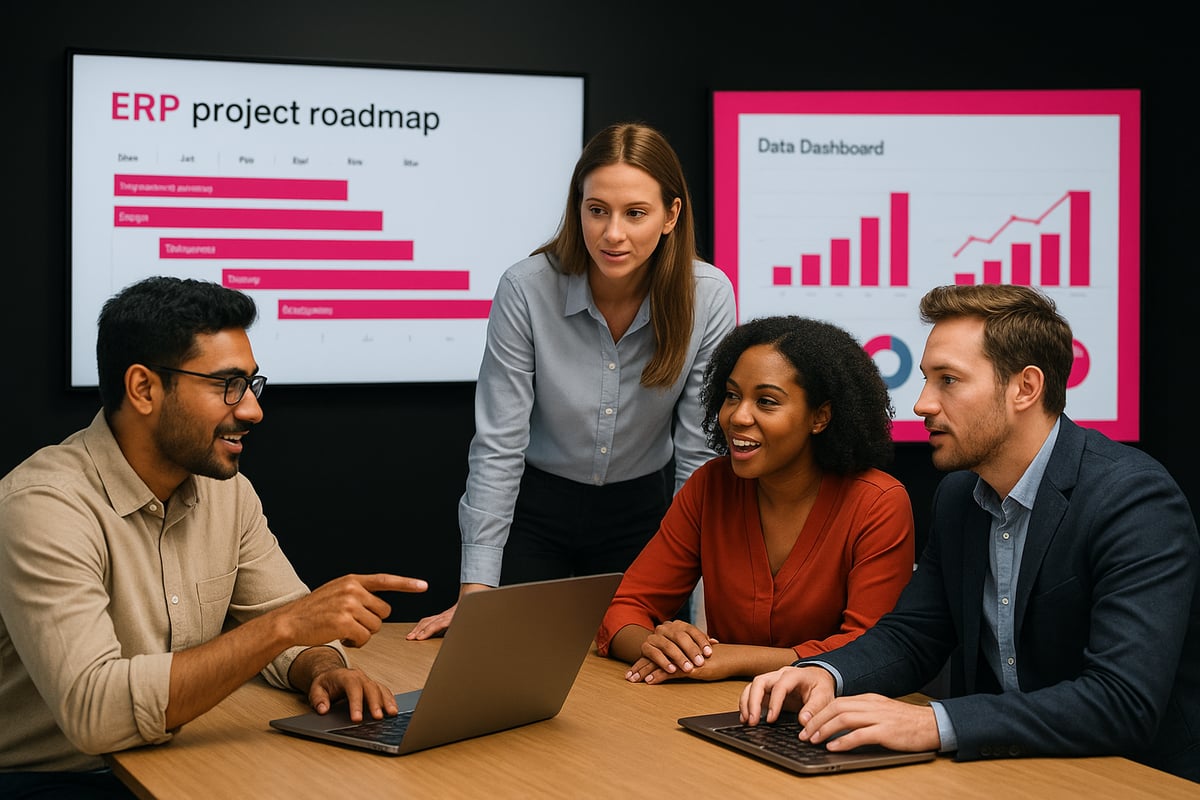
Step 1: Discovery and Needs Assessment
The journey starts with a thorough discovery phase. An erp business consultant leads stakeholder interviews and process mapping sessions to uncover hidden gaps and clarify business objectives. This step lays the foundation for a project rooted in real needs and opportunities.
Key activities include:
- Conducting interviews with department leads and end-users
- Mapping current processes and identifying pain points
- Defining measurable business goals and success criteria
A comprehensive discovery phase reduces project overruns by 28 percent, according to industry benchmarks. By investing time upfront, consultants foster trust and set the stage for a collaborative, knowledge-sharing environment that benefits everyone in the ecosystem.
Step 2: Solution Design and Alignment
Once needs are clear, the erp business consultant crafts tailored ERP architectures and workflows that align with the client's strategic vision. This involves translating business requirements into technical solutions that are scalable, flexible, and future-ready.
Key strategies:
- Design ERP modules that support growth and adaptability
- Align data flows and integrations with enterprise objectives
- Leverage network effects by encouraging cross-functional collaboration
Integrating principles of self-reinforcing ecosystems during solution design ensures that every stakeholder benefits as the ERP environment grows. This approach enables clients to achieve long-term sustainability and value, while consultants become trusted partners in the transformation journey.
Step 3: Implementation and Change Management
With a robust design in place, the erp business consultant leads the configuration, customization, and integration of ERP modules. Effective implementation depends on proactive change management and user adoption programs, ensuring that all participants are engaged and empowered.
Best practices for this phase include:
- Structured user training sessions and workshops
- Clear communication plans for project milestones
- Ongoing feedback loops for continuous improvement
For deeper insights into proven tactics, review these ERP Implementation Best Practices to optimize every stage of the rollout. By establishing virtuous cycles of feedback and adaptation, consultants minimize resistance and accelerate time to value for clients.
Step 4: Post Go-Live Support and Optimization
After go-live, the erp business consultant shifts focus to monitoring system performance and user satisfaction. Post-launch support is critical for delivering ongoing enhancements and capturing additional value from the ERP investment.
Key actions:
- Regularly track user feedback and address issues promptly
- Analyze system data to identify optimization opportunities
- Foster a culture of knowledge-sharing among users and teams
Proactive post go-live support not only increases user retention by 35 percent but also strengthens the self-reinforcing ecosystem, making the ERP platform a go-to destination for high-quality freelance consultants and enterprise clients alike.
Step 5: Measuring Success and Sustaining Value
The final step is all about ensuring that the ERP project delivers measurable, lasting benefits. An erp business consultant tracks key performance indicators (KPIs), business outcomes, and fosters a knowledge-sharing culture for long-term sustainability.
Essential metrics to monitor:
- User adoption rates
- Business process efficiency improvements
- Cost savings and ROI
Sustaining value requires building in network effects, so that every new user or process enhancement increases the platform's overall utility. By nurturing virtuous cycles and a collaborative ecosystem, consultants and clients co-create a sustainable business model that adapts and thrives in an ever-evolving market.
Emerging Technologies and Future Opportunities in ERP Consulting
The future of ERP consulting is rapidly evolving, with new technologies and business models opening unprecedented opportunities. Every erp business consultant will need to master these trends to stay ahead, deliver high-value work, and become a go-to destination for high-quality freelance consultants.
AI, Automation, and Advanced Analytics
Artificial intelligence and automation are revolutionizing the daily work of every erp business consultant. AI-powered process automation streamlines repetitive tasks, freeing up time for strategic analysis and creative problem-solving. Intelligent ERP assistants now provide real-time decision support, using predictive analytics to forecast trends and optimize workflows.
For those seeking to understand these changes, AI-Powered ERP Consulting Trends offers practical insights into how AI is transforming ERP consulting, from automated process mapping to predictive forecasting. These innovations help consultants build virtuous cycles of continuous improvement and long-term sustainability for their clients.
Expanding Talent Marketplaces and Knowledge Ecosystems
The rise of digital talent marketplaces has transformed how erp business consultant professionals connect with clients and peers. These platforms act as self-reinforcing ecosystems, where value grows as more participants share knowledge and collaborate on projects.
Knowledge-sharing is at the heart of these ecosystems. Consultants can access peer-reviewed solutions, participate in workshops, and contribute to a collective intelligence that accelerates project delivery and reduces risk. As these marketplaces mature, they are becoming the go-to destination for high-quality freelance consultants seeking high-value work and professional growth.
Integration with IoT, Blockchain, and Edge Computing
Emerging technologies such as IoT, blockchain, and edge computing are unlocking new possibilities for the erp business consultant. IoT devices provide real-time data capture, enabling smarter, faster decision-making across supply chains and operations. Blockchain technology ensures secure, transparent transactions, supporting compliance and trust in complex environments.
Edge computing further enhances ERP systems by enabling localized data processing, reducing latency, and improving system resilience. By leveraging these technologies, consultants can deliver tailored solutions that drive measurable results and long-term value for enterprise clients.
Sustainability and ESG Integration
Sustainability is now a core focus for every erp business consultant. Clients demand ERP solutions that embed sustainability metrics and support ESG (Environmental, Social, Governance) compliance. Consultants are responding by building dashboards for real-time sustainability tracking, integrating green business practices, and advising on regulatory requirements.
This emphasis on sustainability creates virtuous cycles that benefit both the business and society. Long-term sustainability and value are now recognized as competitive differentiators that help clients and consultants thrive in a rapidly changing world.
New Consulting Models and Revenue Streams
The consulting landscape is shifting toward flexible, outcome-based models. Many organizations now engage fractional experts, tapping into top-tier talent for specific phases of their ERP journey. This approach aligns with the growing demand for managed budgets, rapid launches, and sustainable business models.
To learn more about this trend, explore Understanding fractional ERP experts, which details how fractional consulting empowers consultants and clients alike. By embracing community-driven solutions and collaborative intelligence, the erp business consultant can lead the charge in building resilient, future-ready practices.
Building a Sustainable and High-Value ERP Consulting Practice
To become a leading erp business consultant in 2026, building a sustainable and high-value practice is essential. Success is rooted in creating a self-reinforcing ecosystem that consistently delivers long-term sustainability and value for both clients and consultants.
Creating Virtuous Cycles for Long-Term Success
At the heart of every successful erp business consultant practice is the ability to foster virtuous cycles. These are self-reinforcing systems where positive outcomes lead to more opportunities, deeper expertise, and enhanced client trust.
By encouraging open knowledge-sharing and collaboration, consultants can create a thriving ecosystem. This approach supports continuous improvement, allowing teams to learn from each project and drive better results over time.
Leveraging Network Effects for Growth
Network effects play a crucial role in scaling an erp business consultant practice. As more consultants and clients participate in the ecosystem, the value of the network multiplies. This collaborative environment attracts top-tier talent and high-value projects, making the practice more resilient and adaptable.
Consulting firms that harness network effects often see accelerated growth, with more opportunities for freelancers and businesses to connect, share insights, and innovate together.
Delivering High-Value Work and Client Outcomes
To stand out as an erp business consultant, prioritize transparency, measurable results, and managed budgets. Focus on delivering high-value work that aligns with client goals and drives tangible outcomes.
A commitment to quality builds strong client relationships and positions your practice as a trusted partner. This reputation, in turn, fuels further business growth and reinforces the self-reinforcing ecosystem.
Developing a Sustainable Business Model
A sustainable business model is vital for an erp business consultant practice. Embrace flexible delivery options, such as fractional consulting, to offer clients scalable solutions while maintaining consistent access to top-tier talent.
The consulting market is projected to surpass $400 billion in revenue by 2026, reflecting rising demand for technology upgrades and expert guidance. According to Tech Consulting Market Growth, firms that adapt quickly to market shifts are best positioned to capture these opportunities.
Positioning as a Go-To Destination for ERP Expertise
Establish your erp business consultant practice as the go-to destination for high-quality freelance consultants and enterprise clients alike. Build brand authority through thought leadership, active community engagement, and a relentless focus on delivering value.
By leading the charge in ecosystem building and knowledge-sharing, your practice can become a benchmark for excellence in the evolving ERP consulting landscape.
As you’ve seen throughout this guide, ERP consulting in 2026 is all about adaptability, expertise, and staying ahead of emerging trends. Whether you’re looking to navigate complex post go live challenges, tap into AI driven solutions, or ensure your ERP projects deliver sustainable value, having the right support is essential. If you’re ready to put these insights into action and want guidance tailored to your unique needs, don’t wait—you can book a call with an expert consultant now and take the next step toward a more efficient, future ready ERP landscape.