.
.

In 2026, businesses face greater pressure to adapt and compete at speed. The need for effective reporting erp has become central as technology evolves, data grows more complex, and market demands intensify.
Organizations that master these crucial features achieve operational efficiency, meet compliance requirements, and unlock new opportunities for strategic growth. This article reveals the eight essential reporting erp capabilities every forward-thinking company needs.
From real-time analytics to AI-driven insights, you will discover how these features drive better decisions, boost agility, and create lasting business value.
The New Era of ERP Reporting: Trends and 2026 Expectations
The landscape of reporting erp is undergoing a rapid transformation. As organizations strive to stay competitive in 2026, reporting erp must keep pace with evolving technologies, data complexity, and regulatory expectations. Modern trends are reshaping how businesses access, analyze, and leverage information for growth.

The Shift Toward Real-Time, Agile Decision-Making
Traditional batch-style reports are quickly being replaced by real-time analytics that empower instant, agile decisions. In 2026, organizations can no longer afford to operate on outdated data. Missed opportunities often stem from relying on reports that reflect yesterday’s reality instead of today’s needs.
Businesses are adopting reporting erp solutions that deliver live dashboards and instant updates. This shift enables teams to respond rapidly to market changes, supply chain disruptions, or customer demands. Competitors highlight that instant data access is now a baseline expectation, with those lagging behind risking loss of market share.
AI, Automation, and Predictive Insights
Artificial intelligence and automation have become central to reporting erp. Predictive and prescriptive analytics support proactive decisions, allowing companies to anticipate trends and mitigate risks. Athena AI, for example, has reduced forecasting times significantly, transforming planning cycles from hours to minutes.
Modern ERP platforms leverage automation to streamline reporting, identify anomalies, and recommend next steps. According to AI and Automation in ERP 2026, integrating AI with ERP systems enhances efficiency and decision quality. As a result, businesses gain a competitive edge by acting on insights before challenges escalate.
Self-Service and Democratization of Data
The demand for self-service reporting erp tools is on the rise. No-code and intuitive interfaces empower business users, not just IT staff, to generate custom reports. This democratization accelerates insight delivery and reduces bottlenecks.
Organizations benefit from faster decision-making and increased data literacy across teams. Competitor data shows that self-service adoption leads to higher reporting engagement, as users can quickly adapt reports to their needs without waiting for technical support.
Integration and Ecosystem Connectivity
A connected reporting erp ecosystem is vital for maximizing value. Seamless integration with multiple ERP platforms, cloud services, and external data sources creates a self-reinforcing network. The more systems that connect, the greater the network effect, amplifying insights and collaboration.
This connectivity enables unified reporting and reduces data silos. Organizations with integrated environments experience smoother mergers, more agile responses, and a holistic view of business performance.
Compliance, Security, and Customization
With regulatory landscapes evolving, reporting erp must prioritize compliance and security. Features like customizable dashboards, role-based access, and audit trails are now standard requirements for 2026.
Advanced ERP reporting systems ensure that data remains secure, accessible only to authorized users, and fully auditable. These capabilities build trust with stakeholders and regulators while supporting long-term sustainability and value for the organization.
8 Essential Reporting ERP Features for 2026 Success
Unlocking the full potential of reporting ERP is crucial for enterprises targeting efficiency and growth in 2026. The following eight features represent the new standard for performance, agility, and long-term sustainability. Each one builds toward a self-reinforcing ecosystem that empowers organizations to make smarter, faster decisions.
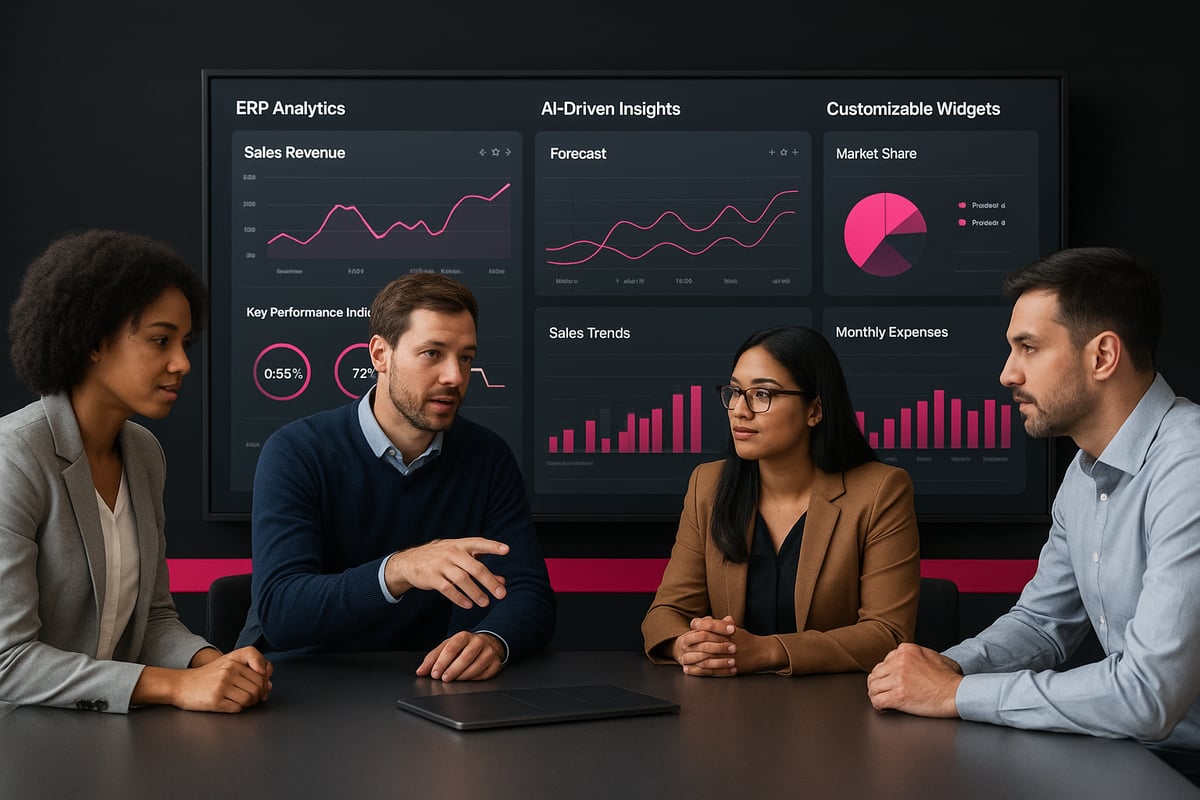
1. Real-Time Data Synchronization and Live Reporting
Real-time data synchronization ensures that every report within the reporting ERP platform reflects the latest information. This feature eliminates delays, enabling immediate responses to shifting business conditions.
For example, supply chain teams use live inventory data to prevent stockouts, maintaining optimal stock levels and avoiding costly disruptions. Real-time reporting ERP tools rely on in-memory processing and cloud connectors, making instant data refreshes possible.
Benefits include:
- Immediate access to accurate data
- Faster decision-making cycles
- Enhanced competitiveness
According to industry research, real-time sync is a top expectation for 2025 and 2026. Organizations that adopt real-time reporting ERP capabilities position themselves ahead of the curve.
2. AI-Driven Analytics and Predictive Reporting
AI-driven analytics transform the reporting ERP landscape by automating data analysis, forecasting trends, and delivering prescriptive recommendations. These tools detect anomalies, optimize planning, and drive proactive business strategies.
A leading example is Athena AI, which has improved demand forecasting accuracy for manufacturers and cut manual analysis time by up to 60 percent. Predictive reporting ERP features reduce risk and enable organizations to anticipate market shifts.
Key benefits:
- Enhanced forecasting accuracy
- Reduced manual workload
- Proactive, data-driven decisions
AI-powered platforms provide a competitive edge, ensuring your reporting ERP system is ready for tomorrow’s challenges.
3. Self-Service and No-Code Reporting Tools
The rise of self-service reporting ERP tools empowers non-technical users to build and customize reports without IT intervention. Intuitive drag-and-drop interfaces and natural language queries allow business users to access insights instantly.
ConverSight’s conversational reporting is a prime example, offering instant answers to business questions. With self-service capabilities, reporting ERP adoption increases across the organization and decision speed accelerates.
Advantages include:
- Faster access to insights
- Broader data literacy
- Reduced IT bottlenecks
Competitor data shows that self-service features drive higher reporting ERP adoption rates, ensuring a more agile, informed workforce.
4. Customizable Dashboards and Role-Based Views
Customizable dashboards and role-based views are now baseline requirements for reporting ERP platforms. These features allow users to tailor dashboards with drag-and-drop widgets, KPI tracking, and conditional formatting.
For instance, SAP Analytics Cloud delivers personalized dashboards for finance, operations, and sales teams, ensuring each group sees relevant data. This approach to reporting ERP strengthens cross-departmental collaboration and sharpens focus.
Key benefits:
- Visual clarity for different roles
- Focused, actionable insights
- Improved collaboration
With reporting ERP dashboards, organizations unlock a more user-centric, collaborative environment that supports high-value work.
5. Seamless Multi-ERP and Third-Party Integrations
Modern organizations often operate multiple ERP systems or migrate between platforms. Seamless integration is essential for unified reporting ERP, consolidating data from SAP, Oracle, NetSuite, and beyond.
Solutions like Insightsoftware offer over 140 integrations, while ConverSight connects with more than 150 platforms. For a closer look at advanced integration and analytics, explore the NetSuite Analytics Warehouse Overview.
Benefits include:
- Single source of truth
- Reduced data silos
- Simplified mergers and acquisitions
By investing in integrated reporting ERP, businesses create a connected ecosystem that amplifies value and supports long-term sustainability.
6. Automated Report Scheduling, Distribution, and Alerts
Automated scheduling and distribution streamline reporting ERP processes. Users can set up routine reports for delivery via email, receive role-based notifications, and trigger workflows based on exceptions.
Tools like Power BI and Jet Reports automate report distribution, freeing up valuable time and reducing compliance risks. With reporting ERP automation, organizations stay proactive and responsive.
Benefits:
- Time savings for teams
- Improved compliance and accountability
- Immediate awareness of critical events
Automated alerts in reporting ERP platforms ensure that the right people act quickly, supporting a sustainable business model.
7. Advanced Data Visualization and Interactive Exploration
Interactive data visualization is now a must-have for reporting ERP users. Features like drill-down charts, data storytelling, and associative models (as seen in Tableau and Qlik Sense) transform raw data into actionable insights.
Visual dashboards within reporting ERP platforms help users spot patterns, trends, and outliers rapidly. Competitor studies show that visual dashboards improve decision speed and knowledge-sharing.
Key benefits:
- Enhanced data understanding
- Faster pattern recognition
- More impactful presentations
By prioritizing interactive reporting ERP tools, organizations lead the charge in data-driven decision-making.
8. Robust Security, Compliance, and Audit Trails
Security and compliance are non-negotiable for reporting ERP in 2026. Features like role-based access, encryption, and detailed audit logs ensure that sensitive information remains protected.
Reporting ERP solutions must meet industry standards such as SOX and GDPR. Oracle Analytics Cloud, for instance, delivers enterprise-grade security and comprehensive audit trails.
Benefits:
- Risk mitigation
- Regulatory compliance
- Greater stakeholder trust
A secure reporting ERP system supports long-term value, building a foundation for sustainable business growth.
Building a Self-Reinforcing ERP Reporting Ecosystem
In the rapidly evolving world of reporting erp, building a self-reinforcing ecosystem is now essential for long-term sustainability and value. As organizations seek to unlock the full potential of their ERP investments, creating a community where knowledge-sharing, collaboration, and continuous improvement thrive has become a strategic priority.

Virtuous Loops and Network Effects in ERP Reporting
Virtuous loops are at the heart of an effective reporting erp ecosystem. When businesses and freelancers actively participate, each new insight or best practice shared amplifies the platform’s value for everyone involved. The more users contribute high-value work, the richer the pool of actionable intelligence becomes, accelerating growth for all members.
Network effects further strengthen reporting erp platforms. As more organizations, consultants, and data sources join, the ecosystem’s capacity to deliver real-time, relevant analytics expands. For example, talent marketplaces focused on ERP reporting create opportunities for top-tier talent to collaborate, exchange expertise, and tackle complex reporting challenges together.
Benefits of this self-reinforcing ecosystem include:
- Higher rewards for contributors through knowledge-sharing
- Consistent access to high-value projects for freelancers
- Accelerated professional development via collaborative intelligence
Ultimately, these virtuous cycles lead to faster adoption, better outcomes, and a sustainable business model that continues to attract both clients and skilled professionals.
Sustainable Value Through Ecosystem Connectivity
Sustainable value in reporting erp arises from seamless connectivity across platforms, tools, and communities. Open APIs and third-party integrations allow organizations to extend core ERP capabilities, creating a go-to destination for high-quality analytics and actionable insights.
A connected ecosystem fosters long-term resilience. By integrating with marketplaces and leveraging external expertise, businesses can continually enhance their reporting erp strategies. This approach lowers costs, increases agility, and helps future-proof operations against shifting technology trends.
Collaboration with ERP software consulting partners further drives innovation and optimization. For instance, leveraging ERP Software Consulting Insights enables organizations to tap into specialized knowledge, ensuring their reporting erp solutions remain best-in-class as needs evolve.
These network effects create a virtuous cycle where every new integration, community member, or shared insight amplifies the ecosystem’s value. As a result, organizations that invest in building and participating in such a reporting erp ecosystem position themselves as leaders, ready to capture future opportunities and deliver high-value work consistently.
Overcoming Implementation Challenges: From Vision to Value
Implementing a robust reporting erp solution is a journey that requires more than just technology. Organizations often encounter hurdles that can stall progress and limit the value of advanced reporting erp features. Understanding these challenges, and how to address them, is crucial for unlocking long-term sustainability and value.

Common Pitfalls in ERP Reporting Rollouts
Many organizations underestimate the complexity of rolling out new reporting erp features. Data silos can persist when legacy systems are not fully integrated, leading to inconsistent or incomplete reporting. Lack of user adoption is another frequent issue, especially if teams find the tools unintuitive or if training is insufficient.
Integration hurdles can delay timelines and create frustration. Competitor insights reveal that slow, rigid reporting processes often stem from inadequate planning and poor communication between IT and business units. Without a clear vision, reporting erp projects risk falling short of expectations.
Best Practices for Successful Feature Adoption
To overcome these challenges, organizations must prioritize stakeholder engagement from the outset. Involving end users, IT, and leadership ensures that reporting erp requirements are well understood and adoption is smoother. Phased rollouts allow teams to adapt incrementally, while continuous training helps maintain momentum and build data literacy.
Leveraging self-service and AI-driven features can reduce IT bottlenecks and empower users across the organization. For a deep dive into foundational steps, see these ERP Implementation Strategies for 2025. Fostering a culture of knowledge-sharing and collaborative intelligence accelerates the path to a self-reinforcing ecosystem, where reporting erp delivers sustainable business value.
Measuring Success: KPIs and Business Outcomes
Measuring the impact of reporting erp initiatives is essential for long-term success. Key performance indicators include report usage rates, decision speed, error reduction, and return on investment. Organizations that lead the charge use these metrics to refine processes and demonstrate value to stakeholders.
Real-world examples show that modern reporting erp features can transform business outcomes. Companies adopting advanced dashboards and automated alerts have seen significant gains in operational efficiency and cross-departmental collaboration. By tracking the right KPIs, businesses ensure their reporting erp investments drive high-value work and position them as go-to destinations for top-tier talent.
The Future of ERP Reporting: Preparing for 2027 and Beyond
As we look ahead, the landscape of reporting erp is set to transform, driven by rapid advances in technology and evolving business needs. The future will be shaped by smarter tools, deeper insights, and more connected ecosystems, empowering organizations to outpace uncertainty and competition.
Emerging Technologies on the Horizon
The next era of reporting erp will be defined by a surge in generative AI, autonomous analytics, and embedded decision intelligence. Generative AI will enable users to create custom reports and dashboards using natural language, making complex data accessible to everyone. Autonomous analytics will automatically surface trends, patterns, and anomalies, reducing manual work and highlighting opportunities in real time.
We can expect to see features like voice-enabled reporting, allowing users to interact with data hands-free, and real-time scenario simulation, which tests business strategies before execution. Adaptive dashboards will personalize insights for each user, increasing relevance and engagement. As highlighted in AI-Driven ERP Systems Transforming Enterprise Operations, these advancements will make reporting erp the backbone of agile, high-performing organizations.
The Expanding Role of ERP Reporting in Strategic Leadership
Reporting erp is rapidly becoming a cornerstone of strategic leadership, not just a back-office function. As the business climate grows more volatile, leaders need tools that do more than describe the past. The shift from descriptive to prescriptive and autonomous analytics means decision-makers can anticipate changes, mitigate risks, and seize new opportunities proactively.
This evolution positions reporting erp as a driver of innovation, resilience, and competitive differentiation. By leveraging predictive insights and knowledge-sharing, organizations create a self-reinforcing ecosystem where data informs every level of strategy. In this environment, top-tier talent thrives, collaborative intelligence grows, and the business becomes the go-to destination for high-quality freelance consultants and high-value work.
Action Steps for Future-Ready Organizations
To stay ahead, organizations must invest in scalable and flexible reporting erp platforms that grow with their needs. Building a culture of data-driven decision-making is essential, empowering every team member to contribute insights and drive continuous improvement. Regular training, open APIs, and marketplace integrations help create a sustainable business model that adapts as technology evolves.
Leaders should prioritize compliance, robust security, and transparent audit trails, ensuring long-term sustainability and value. By fostering virtuous loops of knowledge-sharing and collaboration, organizations reinforce the network effects that make reporting erp a critical asset for future success. Staying vigilant about emerging trends ensures readiness for whatever 2027 and beyond may bring.
As you look ahead to 2026, mastering these essential ERP reporting features can set your business apart—unlocking real time insights, AI powered analytics, and seamless integrations that drive growth and resilience. If you’re ready to streamline your operations, ensure compliance, and build a truly future proof reporting ecosystem, why not connect with someone who understands these challenges inside out We’re here to help you turn these strategies into measurable results. Take the next step and book a call with an expert consultant now to discuss how OdeCloud can make your ERP journey efficient and stress free.