.
.
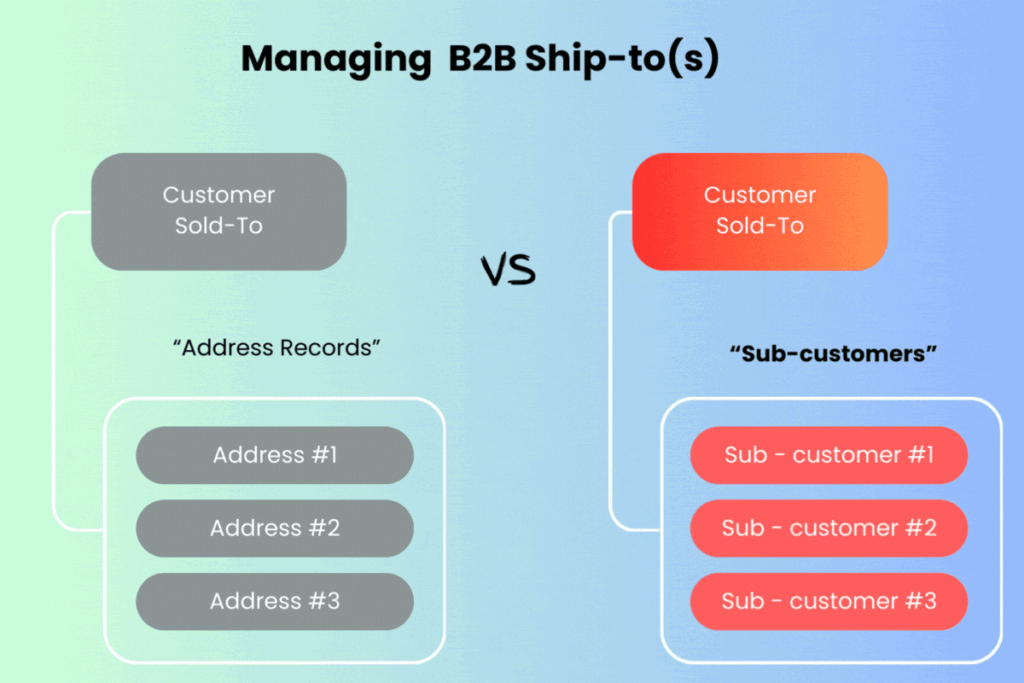
In the dynamic landscape of B2B operations, managing customer records efficiently is paramount for seamless transactions and robust business relationships. Within the realm of NetSuite, a leading cloud-based ERP solution, consultants often encounter a critical decision point: whether to utilize a combination of customer and address records or to opt for a more sophisticated approach involving customer and sub-customer records. This choice significantly influences how businesses map out their Sold-to & Ship-to relations and impacts various operational facets. In this comprehensive exploration – NetSuite Customer Data Management – we’ll delve into these two schools of thought, accompanied by key questions, considerations, and the consultant’s role in guiding clients towards an informed decision.
Key Questions to Ask
- Distribution Centers (DCs): Do you refer to customer shipping addresses as Distribution Centers?
- Ordering from Addresses: Do personnel at these addresses typically place orders themselves?
- Sales Rep Interactions: Are your sales representatives interacting with employees at these addresses for terms and pricing negotiations, or is that solely conducted with individuals at headquarters?
- Autonomous AP Teams: Can the Accounts Payable team at these addresses decide independently to pay for orders shipped to them?
- Credit Limits per Address: Do you intend to enforce a specific credit limit per shipping address for your customers?
Decision Making
A “YES” answer to any of the questions above strongly suggests the necessity of implementing a Customer & Sub-customer structure within NetSuite. Let’s delve into the pros and cons of this approach:
Pros of Sub-customer Records
✅ Flexibility: Sub-customer records provide enhanced flexibility, allowing businesses to leverage out-of-the-box NetSuite features to meet specific requirements. Whether it’s custom pricing, credit limits, or transaction rules, sub-customers offer a granular level of control.
Learn more about NetSuite workflows
✅ Customization: Businesses can tailor settings and configurations at the sub-customer level, ensuring finer control over operations. This level of customization enables businesses to accommodate diverse customer needs and streamline processes accordingly.
✅ Detailed Reporting: Sub-customer structures facilitate detailed reporting, enabling businesses to gain deeper insights into customer-specific activities and transactions. By segregating data at the sub-customer level, organizations can generate comprehensive reports that drive informed decision-making and strategic planning.
Cons of Sub-customer Records
❌ Data Management Overhead: Working with sub-customers requires additional effort in terms of data management and maintenance. Businesses must invest time and resources into accurately categorizing and updating sub-customer records to ensure data integrity and consistency. Proper NetSuite Customer Data Management is crucial in this regard.
❌ Invoicing Complexity: There might be increased complexity during the invoicing process, potentially necessitating more effort from the finance team. Managing multiple sub-customer accounts and associated billing details can introduce challenges in generating accurate invoices and reconciling accounts receivable.
❌ Payment Collection Challenges: Sub-customer structures could introduce complexities in payment collection processes, requiring careful management to ensure smooth transactions. Businesses must implement robust payment collection strategies and closely monitor receivables to mitigate risks associated with sub-customer transactions.
Consultant’s Role
As consultants, it’s imperative to guide clients through the decision-making process by thoroughly evaluating their specific needs, operational workflows, and long-term objectives. By asking the right questions and considering the pros and cons of each approach, consultants can empower clients to make informed decisions that align with their business goals.
In conclusion, the choice between utilizing customer and address records versus customer and sub-customer records in NetSuite warrants careful consideration. While sub-customer structures offer greater flexibility and functionality, they also entail additional complexities that must be weighed against the specific requirements and capabilities of the business. By providing insightful guidance and support, consultants can help clients navigate this decision effectively, ensuring optimal utilization of NetSuite’s capabilities to drive operational excellence and business growth through efficient NetSuite Customer Data Management.
Feel free to reach out if you have any questions with regards to managing B2B customer records in NetSuite.