.
.
In 2025, business leaders face an increasingly complex landscape where ERP software consulting has become central to success. The rapid evolution of technology, integration demands, and data-driven decision-making require more than just basic software knowledge.
With industry data showing that ERP project failure rates remain high and costs of missteps can be significant, the stakes have never been higher. Companies risk productivity loss and budget overruns if their ERP strategies fall short.
This guide empowers you with deep insights, actionable steps, and the latest trends to ensure your ERP initiatives drive efficiency, growth, and a lasting competitive edge. We will cover ERP consulting fundamentals, the consulting lifecycle, emerging trends, how to select the right partner, and proven strategies for maximizing ROI.
Understanding ERP Software Consulting in 2025
In 2025, erp software consulting is more crucial than ever. Business leaders face mounting complexity as platforms evolve, integrations multiply, and digital transformation becomes a necessity. The right consulting partner bridges the gap between technology and business goals, helping organizations thrive in this fast-changing landscape.
Defining ERP Software Consulting
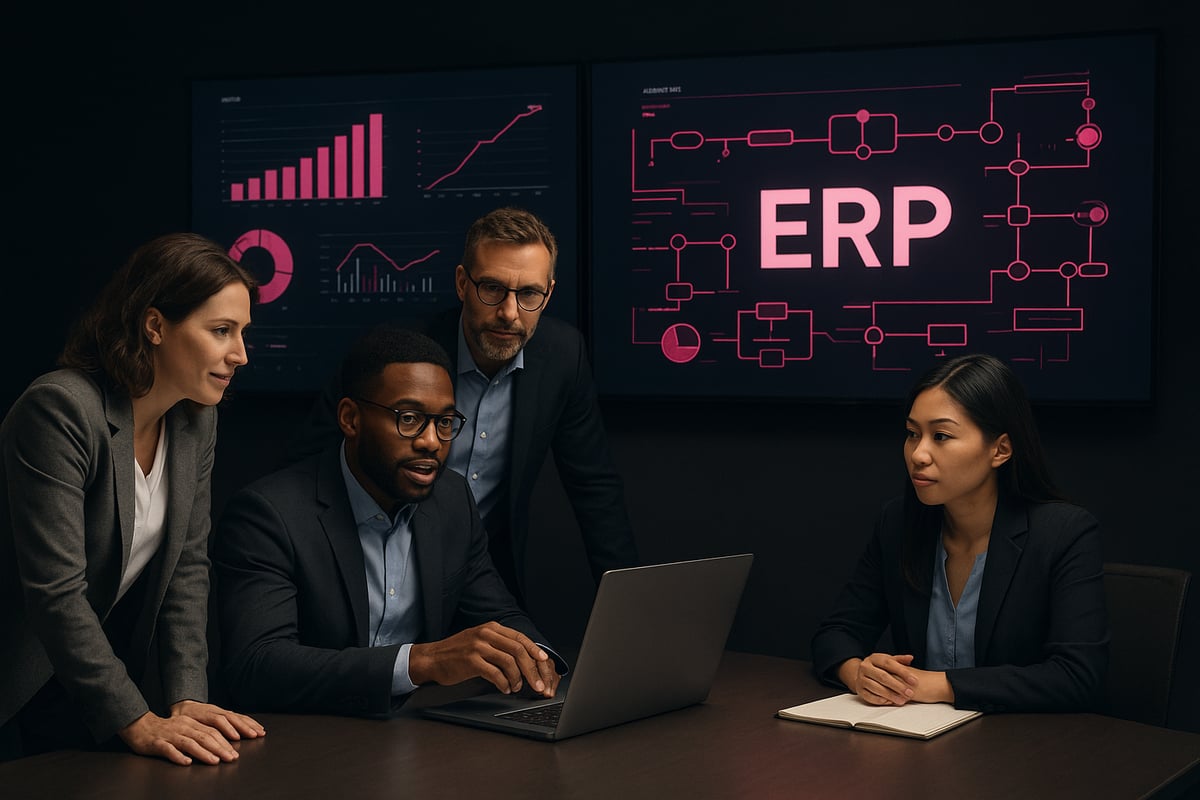
ERP software consulting has grown beyond simple system setup. Today, it covers strategy, software selection, implementation, and ongoing optimization. Consultants take a holistic approach, working closely with leadership to align technology with business objectives.
Unlike traditional IT consulting, erp software consulting focuses on enterprise-wide transformation. Consultants help map processes, identify improvement opportunities, and ensure technology supports long-term strategy. They guide clients from initial needs assessment through to post-launch support.
For example, a manufacturing firm may rely on consultants to tailor ERP modules so production, supply chain, and finance all work in harmony. This alignment is key to unlocking efficiency, reducing manual work, and driving growth. As ERP ecosystems become more interconnected, the consultant’s role expands to include integration across platforms and functions.
Why ERP Consulting Is Essential in 2025
The complexity of modern ERP systems means few organizations can succeed alone. In 2024, over 70 percent of ERP projects required outside expertise. The stakes are high: failed implementations can lead to lost productivity, blown budgets, and major business disruption.
According to ERP implementation failure statistics, the cost of getting it wrong is significant. Misalignment between technology and business strategy is a leading cause of failure. Erp software consulting mitigates these risks by providing expert guidance at every stage.
Consider a distributor who leveraged consulting to overhaul their ERP approach. By realigning the system with strategic goals, they avoided costly mistakes and saved millions. This highlights the value of having a knowledgeable partner who can navigate complex requirements and deliver sustainable results.
The Expanding Role of ERP Consultants
ERP consultants in 2025 are not just implementers; they are strategic partners. Their work covers digital transformation, AI integration, and helping clients meet new regulations. Ongoing optimization is central, as organizations seek continuous improvement and innovation.
A growing trend is the use of fractional and specialized consultants, especially after go-live. These experts provide targeted support for unique challenges, such as analytics, automation, or compliance updates. This flexible model ensures businesses access top-tier talent when and where they need it.
Erp software consulting also fosters knowledge-sharing and network effects. By building a self-reinforcing ecosystem of clients and consultants, companies gain access to collective intelligence and best practices. The result is a sustainable business model that delivers long-term value and high-quality outcomes.
The ERP Consulting Lifecycle: Key Stages and Best Practices
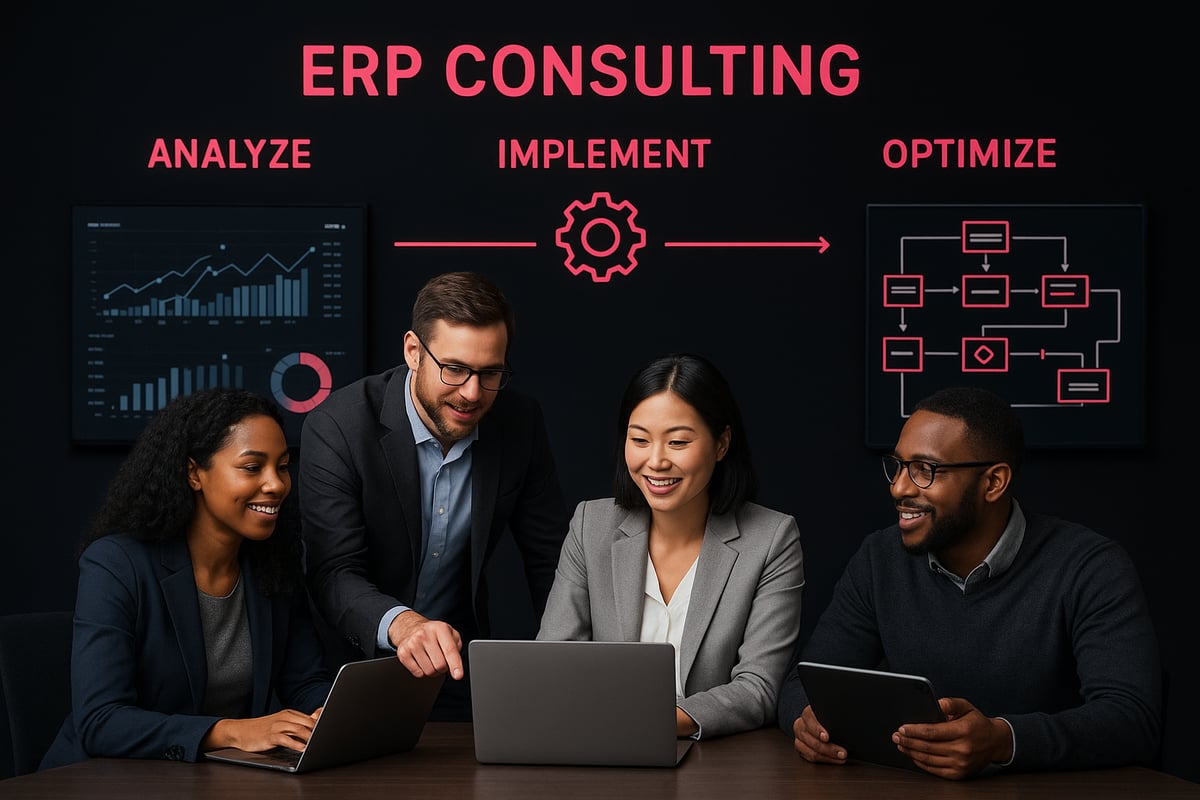
A successful erp software consulting engagement follows a structured lifecycle. Each stage builds upon the last, creating a virtuous cycle that drives long-term sustainability and value. By understanding these stages, organizations can leverage the self-reinforcing ecosystem of consultants and stakeholders to maximize results.
1. Strategy and Needs Assessment
Every erp software consulting journey begins with a clear understanding of business objectives. Consultants work alongside stakeholders to identify pain points, assess readiness, and clarify the desired outcomes.
Key steps include:
- Engaging leaders and end users in open dialogue
- Mapping current processes to pinpoint inefficiencies
- Outlining improvement opportunities and setting measurable goals
For example, a manufacturer may seek to align ERP with supply chain goals, ensuring that production schedules, inventory, and logistics are seamlessly integrated. This collaborative approach creates a foundation for a self-reinforcing ecosystem that supports long-term value.
2. Software Evaluation and Selection
With strategic goals in place, erp software consulting experts guide organizations through the critical phase of choosing the right ERP solution. They help build a requirements matrix that considers functional, technical, and industry-specific needs.
Best practices include:
- Shortlisting and demoing multiple ERP platforms
- Conducting risk assessments and thorough vendor due diligence
- Comparing features, costs, and scalability for future growth
According to industry data, 65 percent of companies cite software fit as the top success factor. For deeper guidance, refer to the Choosing an ERP System Guide, which outlines key steps for evaluation and selection. Making the right choice here starts a virtuous loop, where the selected system supports ongoing business transformation.
3. Implementation Planning and Execution
The implementation phase is where erp software consulting brings plans to life. Robust project governance and resource management are essential. Consultants help develop realistic timelines, track milestones, and manage change.
Key activities:
- Data migration, integration, and system customization
- Phased rollouts to minimize disruption and avoid scope creep
- Training programs to drive user adoption and engagement
A phased approach allows organizations to adapt quickly, resolve issues in real time, and reinforce positive feedback loops. Consultants play a pivotal role in ensuring the process remains collaborative and focused on high-value work.
4. Post-Go-Live Optimization and Support
After go-live, erp software consulting shifts to continuous improvement. Consultants measure performance through KPIs, fine-tune processes, and provide ongoing support.
Support models include:
- Fractional experts for targeted needs
- Managed services to handle routine maintenance
- In-house teams for daily system oversight
For instance, a distribution company might increase efficiency by leveraging consultants for periodic optimization. This ongoing partnership turns the ERP ecosystem into a self-reinforcing engine for innovation and value creation.
5. Change Management and User Enablement
User adoption is crucial for erp software consulting success. Consultants design communication plans, lead training sessions, and build communities of users and champions.
Best practices:
- Transparent, ongoing communication with all stakeholders
- Peer learning groups to foster knowledge-sharing
- Recognition programs to encourage engagement
By nurturing a collaborative environment, companies unlock network effects, where each new user strengthens the system for everyone. This stage cements the sustainable business model that supports long-term growth and adaptation.
Emerging Trends in ERP Software Consulting for 2025
Staying ahead in the world of erp software consulting means embracing trends that drive efficiency, agility, and sustainable value. In 2025, a self-reinforcing ecosystem of consultants and businesses is shaping how organizations extract long-term value from ERP investments. Let us explore the top trends that are redefining this landscape.
AI and Automation in ERP Consulting
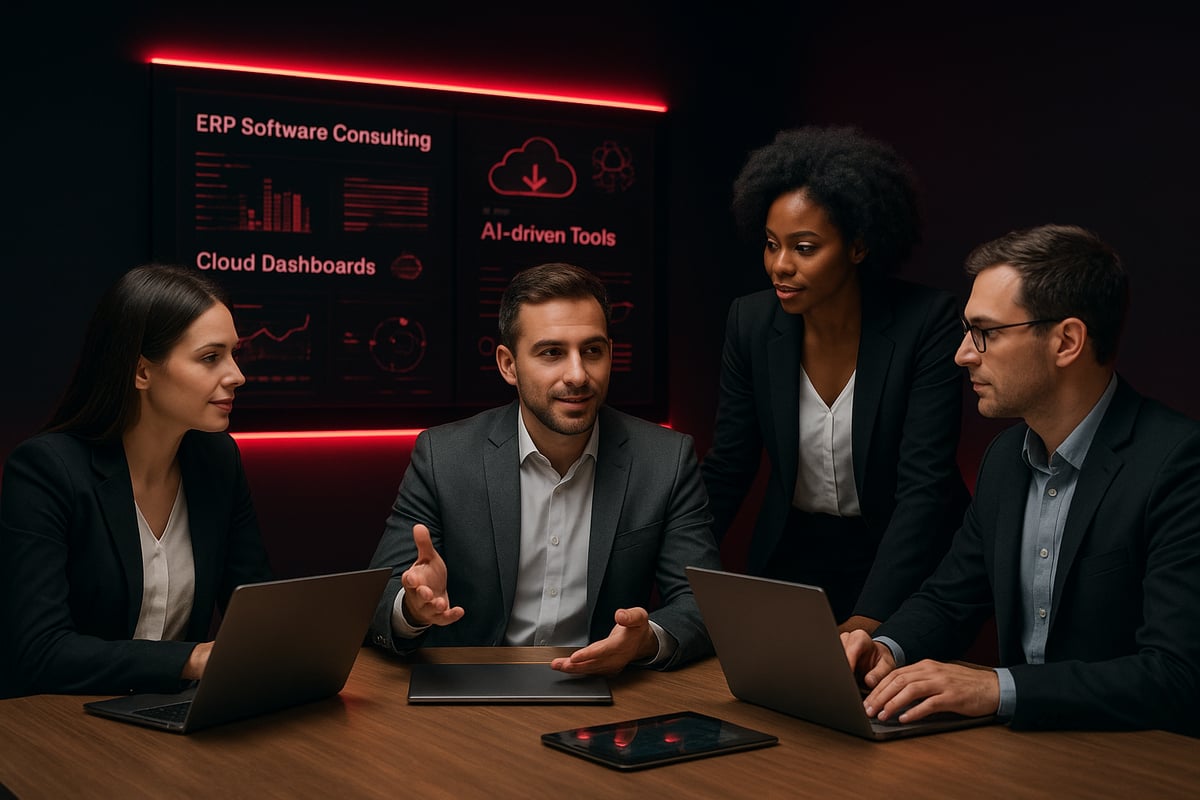
AI is leading the charge in erp software consulting, transforming requirements gathering and solution matching into data-driven, rapid processes. Consultants now leverage AI-powered analytics to identify bottlenecks, optimize workflows, and automate configuration and testing tasks. This shift accelerates project timelines, reduces manual error, and helps businesses adapt to change.
For example, consultants use AI tools to map business objectives to ERP features in real time, providing personalized recommendations. These advancements enable organizations to unlock higher rewards and efficiency gains. To learn more about how AI is reshaping ERP, read this AI in ERP systems resource.
Cloud-First and Industry-Specific ERP Solutions
Cloud-native platforms have become the go-to destination for high-quality erp software consulting in 2025. Over 80 percent of new ERP deployments now run in the cloud, unlocking flexibility, scalability, and lower total cost of ownership. Consultants help businesses choose industry-tailored solutions for sectors like manufacturing, retail, and healthcare.
Mid-market firms, in particular, benefit from cloud ERP’s rapid deployment and real-time data access. The ecosystem of cloud solutions supports seamless integrations, enabling organizations to pivot quickly as markets evolve. Consultants guide clients to sustainable business models by aligning platform choice with industry needs.
Fractional and On-Demand Consulting Models
The erp software consulting marketplace is witnessing a surge in fractional and on-demand experts. Talent marketplaces now connect organizations with top-tier talent for specific project phases or post-go-live support. This model offers speed, flexibility, and cost efficiency, ensuring businesses access specialized skills without long-term commitments.
Companies solve urgent challenges by launching consulting engagements in days instead of months. The self-reinforcing ecosystem of freelancers and businesses promotes knowledge-sharing, driving continuous improvement. Consultants benefit from consistent access to high-value work, while clients gain targeted expertise precisely when needed.
Ecosystem Integration and Network Effects
Integration is at the core of modern erp software consulting. Consultants orchestrate seamless connections between ERP, CRM, supply chain, and analytics platforms, creating a unified business ecosystem. The more participants involved, the greater the network effects, amplifying value for all users.
Retailers, for example, achieve omnichannel success by leveraging interconnected systems that share data and insights. This approach accelerates decision-making and enables businesses to respond faster to customer needs. Consultants play a critical role in fostering these virtuous loops, ensuring every integration adds measurable value.
Focus on Long-Term Value and Sustainability
Long-term sustainability and value are now central to erp software consulting strategies. Consultants help clients establish virtuous cycles of continuous improvement, innovation, and adaptation. This includes building scalable solutions, investing in training, and supporting ongoing optimization.
Manufacturing firms, for example, achieve enduring ROI by partnering with consultants for iterative enhancements and proactive support. The focus extends beyond initial implementation to cultivating a thriving ecosystem where knowledge-sharing and network effects drive lasting success. Sustainable business models emerge, positioning companies for growth in dynamic markets.
How to Choose the Right ERP Consulting Partner
Selecting the right erp software consulting partner can define the success or failure of your transformation. With so many options in today’s talent marketplace, making an informed decision is more critical than ever. You need a partner who not only brings technical expertise but also fits seamlessly with your culture, vision, and long-term sustainability goals.

Evaluating Consulting Expertise and Approach
Begin by assessing the erp software consulting firm’s industry experience and track record. Look for case studies and references that demonstrate success with companies similar to yours. Top-tier talent often comes from consultants who have navigated complex implementations, managed change across global teams, and delivered measurable results.
When comparing partners, consider their methodologies for needs assessment, implementation, and optimization. Some firms focus on rapid deployments, while others prioritize a more tailored approach. Evaluate whether a boutique firm or a global consultancy best fits your requirements. For a detailed comparison of external consulting versus internal resources, review ERP vs In-House IT Consulting to understand the unique value external experts can offer.
A true partner will align their approach with your business culture and values. Their willingness to engage in virtuous loops of feedback and continuous improvement sets the stage for long-term value.
Transparency, Communication, and Accountability
Transparency is a cornerstone of effective erp software consulting partnerships. Insist on clear project reporting, real-time updates, and detailed documentation at every stage. Managed budgets with outcome-focused pricing help you avoid surprises and maintain control over your investment.
Open communication builds trust and accelerates progress. Your consulting partner should provide regular status updates, flag risks early, and involve stakeholders in key decisions. Accountability is equally important. Choose firms that commit to defined deliverables and timelines, and are prepared to adjust as your needs evolve.
Many companies have avoided costly overruns by demanding transparency from the start. A self-reinforcing ecosystem of honesty and knowledge-sharing increases the probability of project success.
Speed, Flexibility, and Talent Access
The pace of business in 2025 demands that erp software consulting partners launch projects quickly and adapt to changing requirements. Top consulting firms offer rapid project mobilization—sometimes in just a few days—compared to the months traditional models might require. This speed enables you to respond to market shifts without delay.
Flexibility is another hallmark of a high-value partner. Fractional consulting models give you access to specialized experts for short-term or ongoing needs. Talent marketplaces now connect you with pre-vetted, top-tier talent for any challenge. For a deeper dive into how modern consulting models accelerate results, see ERP Implementation in 2025.
By leveraging a dynamic ecosystem, you gain access to knowledge-sharing and network effects, making your organization more agile and resilient.
The Role of AI and Technology in Consulting Partnerships
AI and advanced technology are transforming erp software consulting. Leading partners use AI-powered talent matching to connect you with consultants whose expertise aligns with your specific needs. This precision reduces onboarding time and ensures you always have the right skill set for each phase of your project.
Project management platforms with real-time dashboards, automated reporting, and collaborative tools streamline communication. Consultants can focus on high-value work, while technology handles routine tasks. The result is a more efficient, transparent, and sustainable business model.
By choosing a consulting partner that embraces innovation, you position your company at the forefront of digital transformation. A self-reinforcing ecosystem powered by AI and knowledge-sharing delivers long-term sustainability and value for your ERP investment.
Maximizing the Value of Your ERP Consulting Engagement
Unlocking the full potential of erp software consulting means more than just a successful implementation. It requires a holistic approach that fosters measurable results, collaboration, and long-term business resilience. Let us explore how organizations can maximize the value of their consulting partnerships in today's dynamic environment.
Setting Measurable Goals and KPIs
The foundation of a successful erp software consulting engagement is clear goal-setting. Begin by defining objectives that align with your business strategy, such as reducing order processing time or improving inventory accuracy.
Work with your consultants to establish measurable KPIs. These might include ROI, system adoption rates, or process efficiency improvements. For example:
| KPI | Target | Outcome Example |
|---|---|---|
| Order Fulfillment | +25% Speed | 2 days to 1.5 days |
| User Adoption | 95%+ | 98% within 3 months |
| ROI | 18 months | Achieved in 15 months |
Regularly track these metrics with your erp software consulting partner. For more guidance on post-go-live measurement, see the Comprehensive NetSuite Implementation Guide.
Building a Collaborative, Knowledge-Sharing Ecosystem
A self-reinforcing ecosystem is essential for maximizing value in erp software consulting. Foster open communication among consultants, stakeholders, and users. Encourage knowledge-sharing through workshops, peer learning groups, and feedback sessions.
Network effects come into play as more users and experts participate, increasing the value for everyone. When knowledge flows freely, problem-solving accelerates and innovation thrives. This collaborative approach transforms your ERP system into a hub for continuous improvement.
Ensuring Long-Term Sustainability and Value
Long-term sustainability and value in erp software consulting require ongoing commitment. Invest in regular training and support so users stay engaged and confident. Establish virtuous cycles of improvement by reviewing system performance and adapting processes as business needs evolve.
Consultants can help design sustainable business models by focusing on scalable solutions that grow with your organization. Continuous optimization ensures your ERP remains a strategic asset, not just a technical tool.
Avoiding Common Pitfalls and Challenges
Every erp software consulting project faces risks, but proactive planning minimizes setbacks. Common pitfalls include scope creep, user resistance, and poor data quality. Strong project governance and stakeholder engagement are vital.
Consider these critical risk areas:
- Unclear project objectives
- Inadequate user training
- Insufficient change management
- Lack of executive sponsorship
Awareness of these challenges, paired with industry best practices, helps avoid the costly mistakes that drive high failure rates. According to recent ERP project failure rates, effective consulting can make the difference between success and disruption.
Future-Proofing Your ERP Investment
To stay ahead, organizations must regularly assess new trends in erp software consulting, like AI-driven analytics and integrated ecosystems. Build strategies that are scalable, adaptable, and ready for future technology shifts.
Engage consultants who prioritize continuous innovation and knowledge-sharing. This approach creates a self-reinforcing ecosystem of high-value work, enabling your business to capture network effects and sustain long-term growth. By future-proofing your ERP investment, you ensure lasting competitive advantage.
As we’ve explored, navigating ERP consulting in 2025 requires not just the right technology but the right expertise and partnership. Whether you’re aiming to streamline operations, maximize ROI, or future proof your business, having a trusted advisor by your side can make all the difference. If you’re ready to take the next step and want guidance tailored to your specific needs, don’t wait to get expert support. Let’s make your ERP journey efficient and stress free—book a call with an expert consultant now and see how OdeCloud can help you achieve your goals.