.
.
In 2025, organizations are seeing a dramatic transformation as consultant managed services become the cornerstone of operational excellence and sustainable growth. Today’s leaders face rapid change, fierce competition, and rising complexity.
This guide explains how consultant managed services empower businesses to adapt, unlock success, and remain competitive in a shifting landscape. Executives, IT leaders, and decision-makers will discover practical strategies, key trends, and proven benefits.
We will explore the evolution of consultant roles, the business case for managed services, essential models, technology’s impact, best practices, and what the future holds. Get ready to harness industry shifts, leverage emerging trends, and lead with confidence.
The Evolution of Consultant Managed Services
The landscape of consultant managed services is undergoing a remarkable transformation. In recent years, businesses have demanded more than just advice—they want hands-on partners who can drive real results. This shift is redefining how organizations leverage external expertise for operational excellence.

From Traditional Advisory to Managed Services
Consultant managed services have evolved rapidly since the pandemic. Traditionally, consultants offered strategic advice, leaving execution to clients. Today, organizations seek partners who can both design and run critical business functions. Firms like PwC and other Big Four leaders are expanding their managed services offerings, reflecting this new demand for operational partnership.
This shift is driven by multiple factors. Companies face rapid technological change, economic volatility, and ongoing talent shortages. As a result, they want consultants to take on end-to-end management, not just provide recommendations. The managed services market is expected to exceed $500 billion by 2028, according to Managed Services Market Growth Projections. This growth highlights a broadening scope, now covering risk, compliance, cloud, data, finance, and supply chain.
Organizations are increasingly seeking consultant managed services to not only navigate uncertainty but also to enhance their resilience and capacity for innovation. The trend is clear: clients want partners who can “run things,” not just point the way.
Key Differences: Managed Services vs. Traditional Outsourcing
Understanding the distinction between consultant managed services and traditional outsourcing is essential for decision-makers. Outsourcing has historically focused on cost reduction, shifting specific tasks or processes to external vendors. In contrast, managed services blend subject-matter expertise with operational delivery, creating value beyond savings.
Here’s a quick comparison:
| Aspect | Traditional Outsourcing | Consultant Managed Services |
|---|---|---|
| Primary Focus | Cost-cutting | Transformation & value |
| Role of Provider | Task executor | Strategic advisor and operator |
| Risk/Responsibility | Minimal, transactional | Shared, outcome-based |
| Engagement Model | Project or process-based | End-to-end, ongoing |
| Example | IT helpdesk support | AI integration, compliance, analytics |
With consultant managed services, providers act as both advisors and operational partners. They often engage in risk-sharing models, aligning incentives with client outcomes. For instance, BCG expects to generate 20 percent of its revenue from AI integration managed services by 2025. This dual role fosters innovation and enables organizations to move quickly in dynamic markets.
Why the Shift Matters in 2025
The shift toward consultant managed services is particularly significant in 2025. Businesses face mounting pressure for agility, resilience, and access to advanced technology. Traditional transactional relationships are giving way to outcome-based partnerships, where value creation and transformation are the primary objectives.
Consultant managed services help bridge internal skill gaps and accelerate business transformation. For C-suite leaders, these partnerships offer access to specialized capacity, deep expertise, and innovation on demand. As technology and regulatory landscapes become more complex, the ability to collaborate with providers who share responsibility for results is a critical advantage.
In this environment, consultant managed services are no longer a luxury—they are a strategic necessity for competitive, future-ready organizations.
Building the Business Case for Consultant Managed Services
In today's fast-paced environment, organizations face mounting pressures from rapid technological change, evolving regulations, and increasing cybersecurity threats. Leaders recognize that the traditional ways of working are no longer sufficient. Consultant managed services have emerged as a strategic answer, helping executives navigate these complexities while driving operational excellence.

Addressing Critical Business Challenges
The demand for consultant managed services is fueled by several critical challenges. Rapid technological change is at the forefront, with 56% of CEOs citing technology as the top driver of business transformation. Many organizations struggle to keep up with the pace of innovation, especially as new digital tools and platforms emerge.
Talent shortages are another pressing concern. According to Gartner, 26% of CEOs view skills gaps as a significant risk. With specialized roles in IT, cybersecurity, and data analysis in high demand, it is difficult for companies to attract and retain the right talent. Economic and geopolitical volatility adds another layer of uncertainty, making agility and adaptability crucial for survival.
Cybersecurity threats and compliance requirements also continue to grow in complexity. Organizations need robust solutions to protect their data, meet regulatory standards, and ensure business continuity. Consultant managed services help address these challenges by offering access to expertise, scalable resources, and advanced technology. For more on market growth and trends, see the Managed Services Market Size and Trends report.
Benefits of Consultant Managed Services
Consultant managed services deliver a range of tangible benefits. First, they provide immediate access to specialized skills and cutting-edge technology, eliminating the need for costly internal hiring or training. This flexibility allows organizations to scale teams and resources up or down, depending on project needs or business cycles.
Outcome-based fee models are increasingly popular. Instead of traditional billing, companies can choose volume, subscription, or results-driven pricing, which aligns incentives and ensures value delivery. By sharing operational risk with service providers, organizations reduce exposure to disruptions and unexpected challenges.
Business continuity and resilience are also strengthened. Consultant managed services offer proactive support, continuous improvement, and risk management, all of which are vital for maintaining performance in a rapidly changing world.
Real-World Examples and Case Studies
The impact of consultant managed services is evident in recent partnerships and success stories. For instance, PwC’s collaboration with Sage has helped over 150 managed services clients improve efficiency and reduce operational costs. OpenAI and PwC have teamed up to integrate advanced AI solutions for enterprise clients, accelerating their digital transformation journeys.
BCG’s focus on AI-enabled transformation through strategic technology partnerships is another example. These real-world cases demonstrate how consultant managed services bridge skill gaps, deliver measurable results, and foster innovation. They also highlight the importance of selecting partners with proven expertise and a commitment to continuous improvement.
Key Arguments and Perspectives
There are compelling reasons why consultant managed services are gaining traction. By outsourcing complex functions, companies can focus on their core business and strategic initiatives. This shift enables leaders to allocate resources more effectively and drive growth.
Strategic partnerships foster faster digital transformation, as managed service providers bring a wealth of industry knowledge, process expertise, and technology access. For organizations lacking internal capabilities, consultant managed services become not just an option, but an essential component of their operating model.
In summary, building the business case for consultant managed services involves understanding the urgent pressures facing organizations, the unique value these services provide, and the proven impact in real-world scenarios. As the landscape continues to evolve, embracing this model is key to sustaining competitive advantage.
Core Components and Models of Consultant Managed Services
Consultant managed services have rapidly evolved to become the backbone of modern business transformation strategies. Organizations are no longer seeking simple outsourcing solutions; instead, they desire comprehensive operational partnerships. Understanding the core components and delivery models of consultant managed services is essential for leaders aiming to drive efficiency, manage risk, and unlock sustainable growth.
Essential Service Components
Consultant managed services integrate a wide range of business functions into a seamless, end-to-end solution. Providers deliver not just strategic advice but also hands-on management of key operations.
Key components include:
- Finance and accounting process oversight
- IT systems management and cybersecurity
- Human resources administration and talent support
- Supply chain and procurement optimization
- Compliance, risk management, and regulatory guidance
By combining consulting expertise with operational delivery, consultant managed services ensure clients benefit from continuous improvement, real-time analytics, and proactive issue resolution. This approach helps businesses maintain compliance, adapt rapidly to change, and focus on their core mission.
Delivery Models
The delivery models for consultant managed services vary to meet diverse organizational needs. Understanding these models enables decision-makers to select the right level of involvement and accountability.
Common models include:
- Fully managed services, where the provider assumes end-to-end operational responsibility.
- Co-managed or hybrid models, blending client and provider expertise through shared responsibilities.
- Fractional consulting, offering access to specialized experts on a part-time or project basis.
- Subscription-based and outcome-based fee structures, which align costs with business results.
These models are designed to provide flexibility, transparency, and value, making consultant managed services adaptable for organizations of all sizes and industries.
| Model | Provider Role | Client Involvement | Typical Use Case |
|---|---|---|---|
| Fully Managed | Full operational lead | Minimal | Large-scale transformation |
| Co-Managed/Hybrid | Shared responsibilities | Moderate | Complex, evolving projects |
| Fractional Consulting | Specialized input | High | Niche expertise, short-term |
Technology Enablement and Ecosystem Partnerships
Technology is at the heart of consultant managed services. Providers leverage advanced tools, platforms, and AI solutions to deliver measurable business value.
Strategic partnerships with leading vendors such as Sage, OpenAI, Oracle, and Microsoft expand the service capabilities of consultants. These alliances ensure clients gain access to the latest innovations, from AI-powered analytics to secure cloud infrastructure.
Providers also invest in research and development, often acquiring startups or forming ecosystem partnerships to stay ahead of rapid technological advances. This commitment to innovation allows consultant managed services to deliver scalable, future-proof solutions.
Flexibility and Scalability
One of the defining features of consultant managed services is their inherent flexibility and scalability. Organizations can tailor services to precise business needs and adjust resources as priorities shift.
Key flexibility features include:
- Dynamic team structures that expand or contract as projects evolve
- Modular service offerings, enabling clients to choose only what they require
- Adaptive fee models based on usage, outcomes, or business cycles
This level of customization allows consultant managed services to support business continuity, drive growth, and manage costs effectively, especially during periods of rapid change or uncertainty.
Risk and Responsibility Sharing
Consultant managed services go beyond traditional outsourcing by sharing operational and transformation risk with clients. Performance-based contracts align incentives, ensuring providers are accountable for delivering tangible results.
This risk-sharing model means that consultants are invested in the success of their clients. They work collaboratively to identify risks, implement mitigation strategies, and continuously monitor performance. As a result, organizations experience reduced operational risk and greater confidence in achieving their transformation objectives.
The Role of Fractional ERP Experts in Managed Services
Fractional ERP experts play a crucial role in modern consultant managed services. Businesses benefit from rapid access to pre-vetted, specialized talent for post-implementation ERP support.
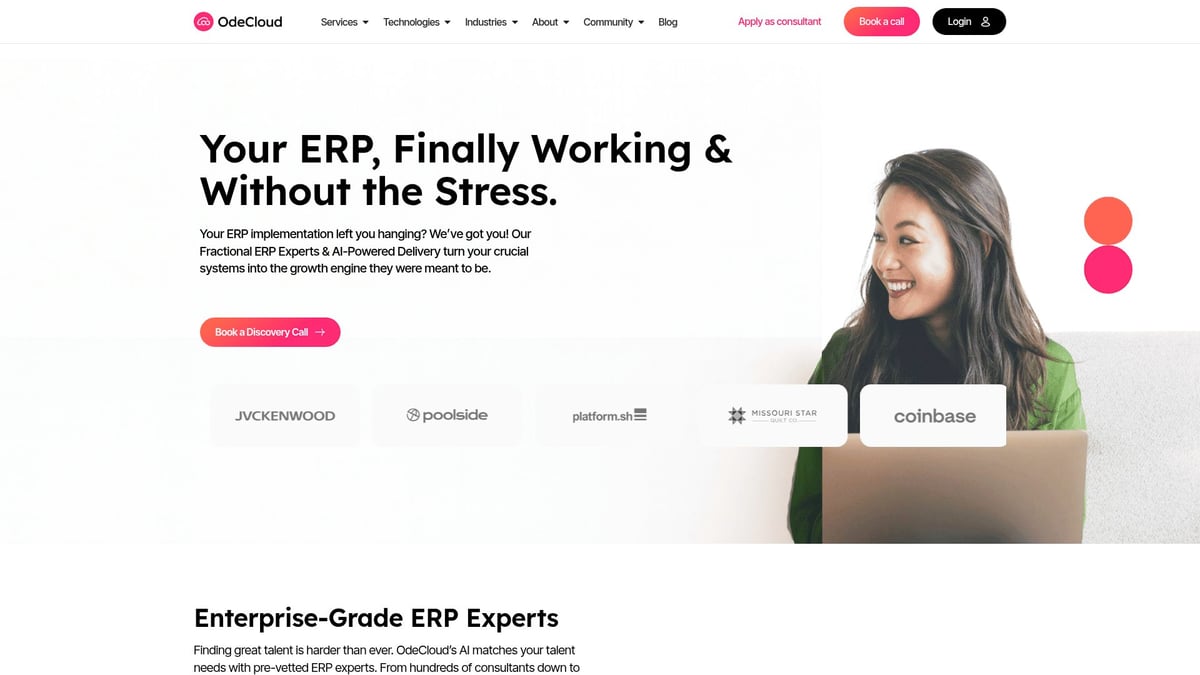
AI-powered talent matching platforms ensure projects are staffed quickly, budgets are managed efficiently, and expertise is available on demand. Fractional models reduce costs and increase flexibility compared to traditional consulting.
For example, OdeCloud’s managed services model enables organizations to scale ERP expertise as needed, providing full transparency and stress-free management. This approach is especially valuable for mid-market and enterprise clients using platforms like Oracle NetSuite, Oracle, or Workday.
By integrating fractional ERP experts, consultant managed services deliver targeted support, innovation, and business continuity in a rapidly changing environment.
Technology, AI, and Innovation in Consultant Managed Services
Technology is at the heart of consultant managed services in 2025. As digital transformation accelerates, businesses rely on these services for seamless integration of advanced tools and expert operational support. Organizations that embrace consultant managed services gain a competitive edge through rapid access to innovation and robust technology delivery.

The Technology Imperative
The technology imperative drives consultant managed services to the forefront of enterprise strategy. More than half of CEOs now identify technology as the main factor shaping transformation plans. As organizations navigate complex digital ecosystems, consultant managed services providers deliver not only technical expertise but also practical deployment experience.
Key technology priorities for 2025 include:
- Cloud migration and optimization
- Data integration and analytics
- Modernization of legacy systems
A strong technology focus ensures consultant managed services can deliver scalable, secure, and future-ready solutions. With demand rising for agility and resilience, the right partner ensures businesses stay ahead of disruption.
AI and Automation in Managed Services
Artificial intelligence and automation are reshaping consultant managed services. Providers leverage AI-driven analytics to generate actionable business insights and optimize processes. Automation streamlines repetitive tasks, boosting efficiency and reducing manual errors.
Key AI and automation use cases:
- Predictive analytics for financial and operational decision-making
- Automated compliance monitoring and risk alerts
- AI-powered resource and talent matching
By integrating AI into consultant managed services, organizations unlock new levels of productivity and innovation. This approach allows teams to focus on strategic initiatives rather than routine work, accelerating overall transformation.
Building Technology Ecosystems
Building robust technology ecosystems is a defining feature of consultant managed services in 2025. Providers form strategic alliances with software vendors, invest in R&D, and acquire startups to deliver best-in-class solutions. Clients benefit from innovation delivered as a service, without heavy upfront investments.
Key elements of technology ecosystems:
- Partnerships with leading vendors like Sage, OpenAI, Oracle, and Microsoft
- Integration of AI, cloud, and analytics platforms
- Collaborative development and rapid prototyping
For a deeper look at how IT consulting is evolving in tandem with managed services, see IT consulting for the future. Leveraging these partnerships, consultant managed services enable clients to tap into the latest advancements with minimal disruption.
Cybersecurity and Compliance
Cybersecurity and compliance are top priorities for consultant managed services. The threat landscape grows more complex each year, with organizations under pressure to protect sensitive data and meet regulatory requirements. Providers offer continuous security monitoring, advanced threat detection, and rapid incident response to safeguard client operations.
Core cybersecurity and compliance offerings include:
- 24/7 threat monitoring and vulnerability assessments
- Automated compliance reporting for regulations such as GDPR and SOX
- Crisis response planning and recovery support
With consultant managed services, businesses gain peace of mind knowing their digital assets and regulatory obligations are managed by experienced professionals.
Real-World Impact
The impact of consultant managed services is evident in real-world outcomes. PwC’s managed services clients now use AI-powered tools for financial insights, resulting in faster, more accurate decision-making. BCG’s AI integration services have helped organizations achieve measurable gains in efficiency and innovation.
Consider these success factors:
| Provider | Technology Focus | Client Benefit |
|---|---|---|
| PwC | AI analytics, automation | Enhanced financial performance |
| BCG | AI integration | Accelerated business transformation |
As digital transformation continues, consultant managed services will remain essential for organizations seeking agility, resilience, and growth.
Best Practices for Implementing Consultant Managed Services in 2025
Implementing consultant managed services in 2025 requires a strategic, well-structured approach. Success hinges on preparation, partner selection, and ongoing optimization. Below are actionable best practices to guide executives and IT leaders through each stage of the journey.
Assessing Organizational Readiness
Begin by evaluating your organization's current capabilities and transformation goals. Identify gaps in technology, skills, or processes that consultant managed services can address.
Involve key stakeholders to map out priorities and clarify which business areas will benefit most. Honest assessment ensures a tailored approach, aligning resources where they deliver the greatest impact.
By establishing a clear baseline, you’ll set measurable objectives and pave the way for a successful partnership.
Selecting the Right Managed Services Partner
Choosing the right provider is critical. Look for a partner with deep industry expertise, robust technology partnerships, and a proven track record in consultant managed services.
Key selection criteria include:
- Experience in your sector
- Access to advanced tools and platforms
- Cultural fit and alignment with your values
- Strong client references and case studies
Comparing managed services to traditional IT models, such as in ERP vs. in-house IT management, highlights the importance of expertise and operational delivery.
Structuring the Engagement
Define clear roles and responsibilities from the outset. Select a delivery model—fully managed, hybrid, or fractional—that fits your organization’s needs.
Set success metrics and agree on performance indicators. Establish transparent governance, regular communication, and escalation protocols.
For technology-enabled functions, review ERP implementation best practices 2025 to ensure alignment with leading consultant managed services strategies.
Change Management and Stakeholder Buy-In
Change management is essential for consultant managed services adoption. Engage leadership and key stakeholders early to build support and reduce resistance.
Communicate the vision, expected benefits, and changes to workflows. Provide training to teams impacted by the new service model.
A proactive approach fosters a positive culture and accelerates value realization.
Ensuring Flexibility and Continuous Improvement
Build flexibility into your consultant managed services agreements. Modular service options allow you to scale up or down based on evolving needs.
Regular feedback loops and ongoing optimization ensure services remain aligned with business objectives.
Adaptation and responsiveness should be central to your managed services strategy in 2025.
Measuring Success and ROI
Establish outcome-based KPIs to evaluate provider performance and business impact. Common metrics include:
- Cost savings and efficiency gains
- Risk reduction and compliance improvements
- Innovation adoption and digital transformation progress
Track progress continuously and adjust as needed. Data-driven measurement is fundamental to realizing the full value of consultant managed services.
Common Pitfalls and How to Avoid Them
Avoid common pitfalls by setting clear expectations and maintaining open communication. Frequent challenges include:
- Misaligned objectives between client and provider
- Underestimating the need for change management
- Choosing partners lacking relevant skills or technology
Mitigate these risks through thorough due diligence, ongoing stakeholder involvement, and a focus on shared outcomes. This approach maximizes the benefits of consultant managed services for sustainable success.
The Future of Consultant Managed Services: Trends and Predictions for 2025 and Beyond
The landscape for consultant managed services is evolving rapidly as organizations brace for a future defined by innovation, agility, and strategic partnerships. In 2025 and beyond, these services are not just a support function; they are a catalyst for transformation. What trends will shape the next era of consultant managed services, and how can businesses position themselves to thrive?
Growth Trajectory and Market Outlook
Consultant managed services are experiencing unprecedented growth. According to recent Management Consulting Services Market Analysis, the global managed services market is on track to surpass 500 billion dollars by 2028. This expansion is fueled by rising demand for cloud adoption, digital transformation, and operational efficiency worldwide.
In the United States, the managed services sector is expected to reach over 165 billion dollars by 2033, driven by cloud migration and a focus on optimal IT solutions. The United States Managed Services Forecast highlights how consultant managed services providers are capitalizing on these trends to deliver real business value.
Emerging Service Models
Service models in consultant managed services are becoming more diverse and flexible. Organizations are increasingly choosing outcome-based and subscription pricing, which align costs with measurable results. Fractional and on-demand consulting allow clients to tap into specialized expertise precisely when needed, while hybrid models blend advisory, technology, and operational delivery.
This shift enables businesses to tailor solutions to their unique challenges, ensuring that consultant managed services remain adaptable in a dynamic environment.
Technology-Driven Transformation
Technology is at the heart of consultant managed services innovation. Providers are integrating AI, automation, and advanced data analytics to streamline processes and deliver actionable insights. AI-powered tools help clients predict market shifts, optimize resources, and accelerate decision-making.
By leveraging cutting-edge platforms and forming alliances with software vendors, consultant managed services firms are helping clients harness technology without the burden of large capital investments. This approach ensures organizations stay ahead of the curve as digital transformation accelerates.
Evolving Client Expectations
Clients now expect more than transactional support from consultant managed services. Transparency, flexibility, and speed are top priorities. Businesses want partners who deliver value creation, not just cost savings.
Providers are responding by offering modular services, real-time reporting, and continuous improvement cycles. These shifts reflect a broader move toward outcome-driven, strategic relationships where both parties share responsibility for success.
Talent and Skills Evolution
The rapid evolution of consultant managed services is reshaping the talent landscape. Providers are investing heavily in upskilling and reskilling their teams to meet growing client demands. Cross-functional expertise is now essential, blending technical, operational, and industry-specific knowledge.
This focus on talent ensures that consultant managed services can bridge skill gaps for clients, enable innovation, and deliver sustainable results in a competitive market.
Strategic Partnerships and Ecosystem Building
Building robust ecosystems is a defining trend in consultant managed services. Firms are forming alliances with software vendors, startups, and industry specialists to create end-to-end solutions. These partnerships give clients access to best-in-class technology, innovation, and domain expertise.
The result is a collaborative approach where consultant managed services act as a gateway to broader value networks, enhancing the overall client experience.
Long-Term Impact on Business Models
Looking ahead, consultant managed services are set to become the standard for operational excellence and transformation. Businesses are shifting from transactional engagements to strategic, long-term partnerships that drive resilience, agility, and competitive advantage.
The integration of technology, flexible service models, and shared responsibility is redefining how organizations operate. As consultant managed services mature, they will play a central role in shaping the future of business success.
As you look ahead to 2025, it’s clear that consultant managed services are essential for navigating complexity, accelerating transformation, and staying resilient in a rapidly changing world. Whether you’re considering fractional ERP experts, leveraging AI-powered solutions, or simply seeking a stress-free path to operational excellence, having the right guidance makes all the difference. If you’re ready to explore how these strategies can unlock success for your business, let’s connect and discuss your unique goals.
Book a call with an expert consultant now
and take the first step toward a more agile and competitive future.